
 0
0
Computer Components
2480 –
2490
of
4773
Availability
Sort by
Advance Filters
Kingston Technology
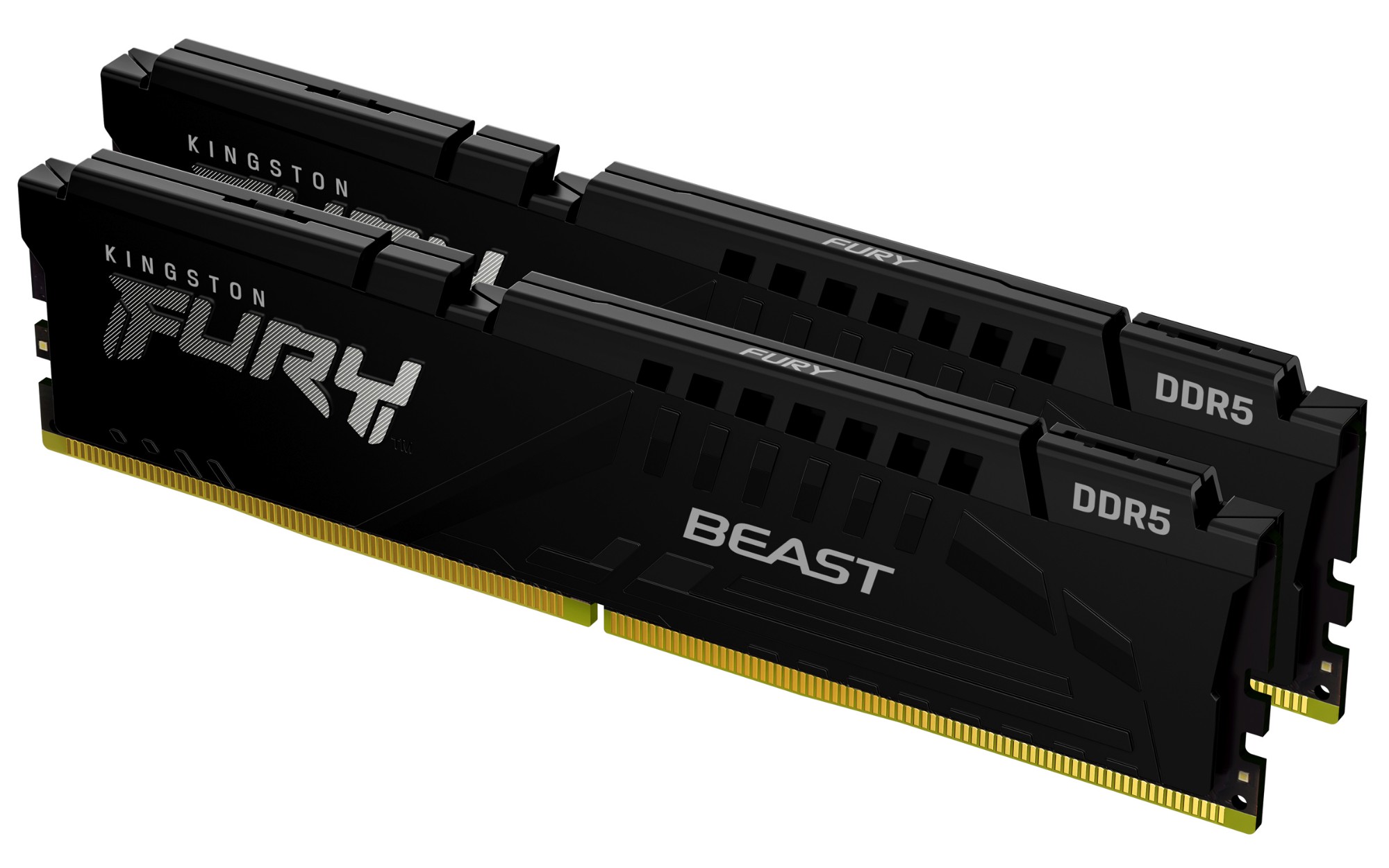
Kingston Technology KF560C36BBEK2-16 Kingston Technology FURY Beast 16GB 6000MT/s DDR5 CL36 DIMM (Kit of 2) Black EXPO
Up to 6800MT/sKingston FURY™ Beast DDR5 memory provides superb speed, capacity and reliability for next-gen gaming platforms. Level up your machine’s performance with enhanced features like on-die ECC for better stability and dual 32-bit subchannels to boost efficiency. Kingston FURY Beast DDR5 offers overclock specs for Intel® XMP 3.0 and AMD EXPO™ with customisable profiles for speeds and timings to help you wring the most from your gaming experience, livestream at 4K+ or push animation and 3D rendering projects.Kingston FURY™ Beast DDR5 memory brings the latest, cutting-edge technology for next-gen gaming platforms. Taking speed, capacity and reliability even further, DDR5 arrives with an arsenal of enhanced features, like on-die ECC (ODECC) for improved stability at extreme speeds, dual 32-bit subchannels for increased efficiency and an on-module power management integrated circuit (PMIC) to provide juice where it’s needed most. Superior speed advancements, with double the banks from 16 to 32 and double the burst length from 8 to 16, take DDR5 memory, your gaming experience and your overall system applications to the next level of performance.Whether you’re pushing the limits in your gaming with the most extreme settings, live streaming at 4K+ or pushing large animation and 3D rendering, Kingston FURY Beast DDR5 memory is the level-up needed, while seamlessly bridging style and unleashing performance.With options featuring Intel XMP 3.0 or AMD EXPO, two new DDR5 overclock specs that include customisable profiles for speeds and timings, Kingston FURY Beast DDR5 has your compatible overclock solutions covered."Improved stability for overclockingOn-die ECC (ODECC) helps maintain data integrity to sustain the ultimate performance while you push the limits!Increased efficiencyBoosted by double the banks and burst length and two independent 32-bit subchannels, DDR5’s exceptional handling of data shines with the latest games, programs and demanding applications.Intel® XMP 3.0 certifiedAdvanced pre-optimised timings, speed and voltage for overclocking performance and save new user-customisable profiles using a programmable PMIC.AMD EXPO certifiedAMD EXPO (Extended Profiles for Overclocking) Certified modules include Intel XMP 3.0 profiles, enabling compatibility with the platform of your choice.Qualified by the world’s leading motherboard manufacturers*Tested and approved so you can build and upgrade with confidence on your preferred motherboard.Low-profile heat spreaderNewly designed heat spreaders in black or white combine bold styling and outstanding cooling functionality.
Part# KF560C36BBEK2-16
SKU S19454
In
Stock


HPE
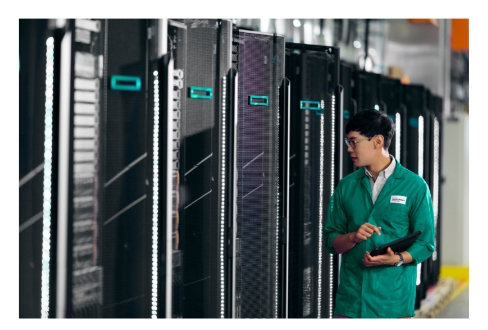
HPE P56995-B21 HPE ProLiant DL380 Gen11 LFF Front Tri-Mode Cable Kit
Part# P56995-B21
SKU S19454
In
Stock
Intel
Intel PK8071305082000 Intel Xeon w5-3435X processor 3.1 GHz 45 MB Smart Cache
Intel® Trusted Execution TechnologyIntel® Trusted Execution Technology for safer computing is a versatile set of hardware extensions to Intel® processors and chipsets that enhance the digital office platform with security capabilities such as measured launch and protected execution. It enables an environment where applications can run within their own space, protected from all other software on the system.Intel® Virtualization Technology for Directed I/O (VT-d)Intel® Virtualization Technology for Directed I/O (VT-d) continues from the existing support for IA-32 (VT-x) and Itanium® processor (VT-i) virtualization adding new support for I/O-device virtualization. Intel VT-d can help end users improve security and reliability of the systems and also improve performance of I/O devices in virtualized environments.Intel® Virtualization Technology (VT-x)Intel® Virtualization Technology (VT-x) allows one hardware platform to function as multiple âvirtualâ platforms. It offers improved manageability by limiting downtime and maintaining productivity by isolating computing activities into separate partitions.Intel® 64Intel® 64 architecture delivers 64-bit computing on server, workstation, desktop and mobile platforms when combined with supporting software.¹ Intel 64 architecture improves performance by allowing systems to address more than 4 GB of both virtual and physical memory.CacheCPU Cache is an area of fast memory located on the processor. Intel® Smart Cache refers to the architecture that allows all cores to dynamically share access to the last level cache.Intel® AES New InstructionsIntel® AES New Instructions (Intel® AES-NI) are a set of instructions that enable fast and secure data encryption and decryption. AES-NI are valuable for a wide range of cryptographic applications, for example: applications that perform bulk encryption/decryption, authentication, random number generation, and authenticated encryption.Intel® Turbo Boost TechnologyIntel® Turbo Boost Technology dynamically increases the processor's frequency as needed by taking advantage of thermal and power headroom to give you a burst of speed when you need it, and increased energy efficiency when you donât.Max Turbo FrequencyMax Turbo Frequency is the maximum single-core frequency at which the processor is capable of operating using Intel® Turbo Boost Technology and, if present, Intel® Turbo Boost Max Technology 3.0 and Intel® Thermal Velocity Boost. Frequency is typically measured in gigahertz (GHz), or billion cycles per second.Execute Disable BitExecute Disable Bit is a hardware-based security feature that can reduce exposure to viruses and malicious-code attacks and prevent harmful software from executing and propagating on the server or network.Intel® Hyper-Threading TechnologyIntel® Hyper-Threading Technology (Intel® HT Technology) delivers two processing threads per physical core. Highly threaded applications can get more work done in parallel, completing tasks sooner.Instruction SetAn instruction set refers to the basic set of commands and instructions that a microprocessor understands and can carry out. The value shown represents which Intelâs instruction set this processor is compatible with.Intel vPro® Platform EligibilityThe Intel vPro® platform is a set of hardware and technologies used to build business computing endpoints with premium performance, built-in security, modern manageability and platform stability.Intel® VT-x with Extended Page Tables (EPT)Intel® VT-x with Extended Page Tables (EPT), also known as Second Level Address Translation (SLAT), provides acceleration for memory intensive virtualized applications. Extended Page Tables in Intel® Virtualization Technology platforms reduces the memory and power overhead costs and increases battery life through hardware optimization of page table management.Enhanced Intel SpeedStep® TechnologyEnhanced Intel SpeedStep® Technology is an advanced means of enabling high performance while meeting the power-conservation needs of mobile systems. Conventional Intel SpeedStep® Technology switches both voltage and frequency in tandem between high and low levels in response to processor load. Enhanced Intel SpeedStep® Technology builds upon that architecture using design strategies such as Separation between Voltage and Frequency Changes, and Clock Partitioning and Recovery.Intel® Speed Shift TechnologyIntel® Speed Shift Technology uses hardware-controlled P-states to deliver dramatically quicker responsiveness with single-threaded, transient (short duration) workloads, such as web browsing, by allowing the processor to more quickly select its best operating frequency and voltage for optimal performance and power efficiency.Intel® Turbo Boost Technology 2.0 FrequencyIntel® Turbo Boost Technology 2.0 Frequency is the maximum single core frequency at which the processor is capable of operating using Intel® Turbo Boost Technology. Frequency is typically measured in gigahertz (GHz), or billion cycles per second.Intel® Software Guard Extensions (Intel® SGX)Intel® Software Guard Extensions (Intel® SGX) provide applications the ability to create hardware enforced trusted execution protection for their applicationsâ sensitive routines and data. Intel® SGX provides developers a way to partition their code and data into CPU hardened trusted execution environments (TEEâs).Intel® Deep Learning Boost (Intel® DL Boost)A new set of embedded processor technologies designed to accelerate AI deep learning use cases. It extends Intel AVX-512 with a new Vector Neural Network Instruction (VNNI) that significantly increases deep learning inference performance over previous generations.Instruction Set ExtensionsInstruction Set Extensions are additional instructions which can increase performance when the same operations are performed on multiple data objects. These can include SSE (Streaming SIMD Extensions) and AVX (Advanced Vector Extensions).Intel® Turbo Boost Max Technology 3.0 FrequencyIntel® Turbo Boost Max Technology 3.0 identifies the best performing core(s) on a processor and provides increased performance on those cores through increasing frequency as needed by taking advantage of power and thermal headroom. Intel® Turbo Boost Max Technology 3.0 frequency is the clock frequency of the CPU when running in this mode.Intel® Turbo Boost Max Technology 3.0Intel® Turbo Boost Max Technology 3.0 identifies the best performing core(s) on a processor and provides increased performance on those cores through increasing frequency as needed by taking advantage of power and thermal headroom.Intel® Total Memory EncryptionTME â Total Memory Encryption (TME) helps protect data against exposure via physical attack on memory, such as cold-boot attacks.Max # of UPI LinksIntel® Ultra Path Interconnect (UPI) links are a high speed, point-to-point interconnect bus between the processors, delivering increased bandwidth and performance over Intel® QPI.# of AVX-512 FMA UnitsIntel® Advanced Vector Extensions 512 (AVX-512), new instruction set extensions, delivering ultra-wide (512-bit) vector operations capabilities, with up to 2 FMAs (Fused Multiply Add instructions), to accelerate performance for your most demanding computational tasks.Intel® Resource Director Technology (Intel® RDT)Intel® RDT brings new levels of visibility and control over how shared resources such as last-level cache (LLC) and memory bandwidth are used by applications, virtual machines (VMs) and containers.Intel® Optane⢠Persistent Memory SupportedIntel® Optane⢠persistent memory is a revolutionary tier of non-volatile memory that sits between memory and storage to provide large, affordable memory capacity that is comparable to DRAM performance.  Delivering large system-level memory capacity when combined with traditional DRAM, Intel Optane persistent memory is helping transform critical memory constrained workloads â from cloud, databases, in-memory analytics, virtualization, and content delivery networks.Mode-based Execute Control (MBEC)Mode-based Execute Control can more reliably verify and enforce the integrity of kernel level code.Intel® Boot GuardIntel® Device Protection Technology with Boot Guard helps protect the systemâs pre-OS environment from viruses and malicious software attacks.Intel® Control-Flow Enforcement TechnologyCET - Intel Control-flow Enforcement Technology (CET) helps protect against the misuse of legitimate code snippets through return-oriented programming (ROP) control-flow hijacking attacks.Intel® Transactional Synchronization ExtensionsIntel® Transactional Synchronization Extensions (Intel® TSX) are a set of instructions that add hardware transactional memory support to improve performance of multi-threaded software.
Part# PK8071305082000
SKU S19454
In
Stock
Intel
Intel PK8071305129200 Intel Xeon w3-2423 processor 2.1 GHz 15 MB Smart Cache
Intel® Trusted Execution TechnologyIntel® Trusted Execution Technology for safer computing is a versatile set of hardware extensions to Intel® processors and chipsets that enhance the digital office platform with security capabilities such as measured launch and protected execution. It enables an environment where applications can run within their own space, protected from all other software on the system.Intel® Virtualization Technology for Directed I/O (VT-d)Intel® Virtualization Technology for Directed I/O (VT-d) continues from the existing support for IA-32 (VT-x) and Itanium® processor (VT-i) virtualization adding new support for I/O-device virtualization. Intel VT-d can help end users improve security and reliability of the systems and also improve performance of I/O devices in virtualized environments.Intel® Virtualization Technology (VT-x)Intel® Virtualization Technology (VT-x) allows one hardware platform to function as multiple âvirtualâ platforms. It offers improved manageability by limiting downtime and maintaining productivity by isolating computing activities into separate partitions.Intel® 64Intel® 64 architecture delivers 64-bit computing on server, workstation, desktop and mobile platforms when combined with supporting software.¹ Intel 64 architecture improves performance by allowing systems to address more than 4 GB of both virtual and physical memory.CacheCPU Cache is an area of fast memory located on the processor. Intel® Smart Cache refers to the architecture that allows all cores to dynamically share access to the last level cache.Intel® AES New InstructionsIntel® AES New Instructions (Intel® AES-NI) are a set of instructions that enable fast and secure data encryption and decryption. AES-NI are valuable for a wide range of cryptographic applications, for example: applications that perform bulk encryption/decryption, authentication, random number generation, and authenticated encryption.Intel® Turbo Boost TechnologyIntel® Turbo Boost Technology dynamically increases the processor's frequency as needed by taking advantage of thermal and power headroom to give you a burst of speed when you need it, and increased energy efficiency when you donât.Max Turbo FrequencyMax Turbo Frequency is the maximum single-core frequency at which the processor is capable of operating using Intel® Turbo Boost Technology and, if present, Intel® Turbo Boost Max Technology 3.0 and Intel® Thermal Velocity Boost. Frequency is typically measured in gigahertz (GHz), or billion cycles per second.Execute Disable BitExecute Disable Bit is a hardware-based security feature that can reduce exposure to viruses and malicious-code attacks and prevent harmful software from executing and propagating on the server or network.Intel® Hyper-Threading TechnologyIntel® Hyper-Threading Technology (Intel® HT Technology) delivers two processing threads per physical core. Highly threaded applications can get more work done in parallel, completing tasks sooner.Instruction SetAn instruction set refers to the basic set of commands and instructions that a microprocessor understands and can carry out. The value shown represents which Intelâs instruction set this processor is compatible with.Intel® VT-x with Extended Page Tables (EPT)Intel® VT-x with Extended Page Tables (EPT), also known as Second Level Address Translation (SLAT), provides acceleration for memory intensive virtualized applications. Extended Page Tables in Intel® Virtualization Technology platforms reduces the memory and power overhead costs and increases battery life through hardware optimization of page table management.Enhanced Intel SpeedStep® TechnologyEnhanced Intel SpeedStep® Technology is an advanced means of enabling high performance while meeting the power-conservation needs of mobile systems. Conventional Intel SpeedStep® Technology switches both voltage and frequency in tandem between high and low levels in response to processor load. Enhanced Intel SpeedStep® Technology builds upon that architecture using design strategies such as Separation between Voltage and Frequency Changes, and Clock Partitioning and Recovery.Intel® Speed Shift TechnologyIntel® Speed Shift Technology uses hardware-controlled P-states to deliver dramatically quicker responsiveness with single-threaded, transient (short duration) workloads, such as web browsing, by allowing the processor to more quickly select its best operating frequency and voltage for optimal performance and power efficiency.Intel® Turbo Boost Technology 2.0 FrequencyIntel® Turbo Boost Technology 2.0 Frequency is the maximum single core frequency at which the processor is capable of operating using Intel® Turbo Boost Technology. Frequency is typically measured in gigahertz (GHz), or billion cycles per second.Intel® Software Guard Extensions (Intel® SGX)Intel® Software Guard Extensions (Intel® SGX) provide applications the ability to create hardware enforced trusted execution protection for their applicationsâ sensitive routines and data. Intel® SGX provides developers a way to partition their code and data into CPU hardened trusted execution environments (TEEâs).Intel® Deep Learning Boost (Intel® DL Boost)A new set of embedded processor technologies designed to accelerate AI deep learning use cases. It extends Intel AVX-512 with a new Vector Neural Network Instruction (VNNI) that significantly increases deep learning inference performance over previous generations.Instruction Set ExtensionsInstruction Set Extensions are additional instructions which can increase performance when the same operations are performed on multiple data objects. These can include SSE (Streaming SIMD Extensions) and AVX (Advanced Vector Extensions).Intel® Turbo Boost Max Technology 3.0 FrequencyIntel® Turbo Boost Max Technology 3.0 identifies the best performing core(s) on a processor and provides increased performance on those cores through increasing frequency as needed by taking advantage of power and thermal headroom. Intel® Turbo Boost Max Technology 3.0 frequency is the clock frequency of the CPU when running in this mode.Intel® Turbo Boost Max Technology 3.0Intel® Turbo Boost Max Technology 3.0 identifies the best performing core(s) on a processor and provides increased performance on those cores through increasing frequency as needed by taking advantage of power and thermal headroom.Intel® Total Memory EncryptionTME â Total Memory Encryption (TME) helps protect data against exposure via physical attack on memory, such as cold-boot attacks.Max # of UPI LinksIntel® Ultra Path Interconnect (UPI) links are a high speed, point-to-point interconnect bus between the processors, delivering increased bandwidth and performance over Intel® QPI.# of AVX-512 FMA UnitsIntel® Advanced Vector Extensions 512 (AVX-512), new instruction set extensions, delivering ultra-wide (512-bit) vector operations capabilities, with up to 2 FMAs (Fused Multiply Add instructions), to accelerate performance for your most demanding computational tasks.Intel® Resource Director Technology (Intel® RDT)Intel® RDT brings new levels of visibility and control over how shared resources such as last-level cache (LLC) and memory bandwidth are used by applications, virtual machines (VMs) and containers.Intel® Optane⢠Persistent Memory SupportedIntel® Optane⢠persistent memory is a revolutionary tier of non-volatile memory that sits between memory and storage to provide large, affordable memory capacity that is comparable to DRAM performance.  Delivering large system-level memory capacity when combined with traditional DRAM, Intel Optane persistent memory is helping transform critical memory constrained workloads â from cloud, databases, in-memory analytics, virtualization, and content delivery networks.Mode-based Execute Control (MBEC)Mode-based Execute Control can more reliably verify and enforce the integrity of kernel level code.Intel® Boot GuardIntel® Device Protection Technology with Boot Guard helps protect the systemâs pre-OS environment from viruses and malicious software attacks.Intel® Control-Flow Enforcement TechnologyCET - Intel Control-flow Enforcement Technology (CET) helps protect against the misuse of legitimate code snippets through return-oriented programming (ROP) control-flow hijacking attacks.Intel® Transactional Synchronization ExtensionsIntel® Transactional Synchronization Extensions (Intel® TSX) are a set of instructions that add hardware transactional memory support to improve performance of multi-threaded software.
Part# PK8071305129200
SKU S19454
In
Stock
ASUS
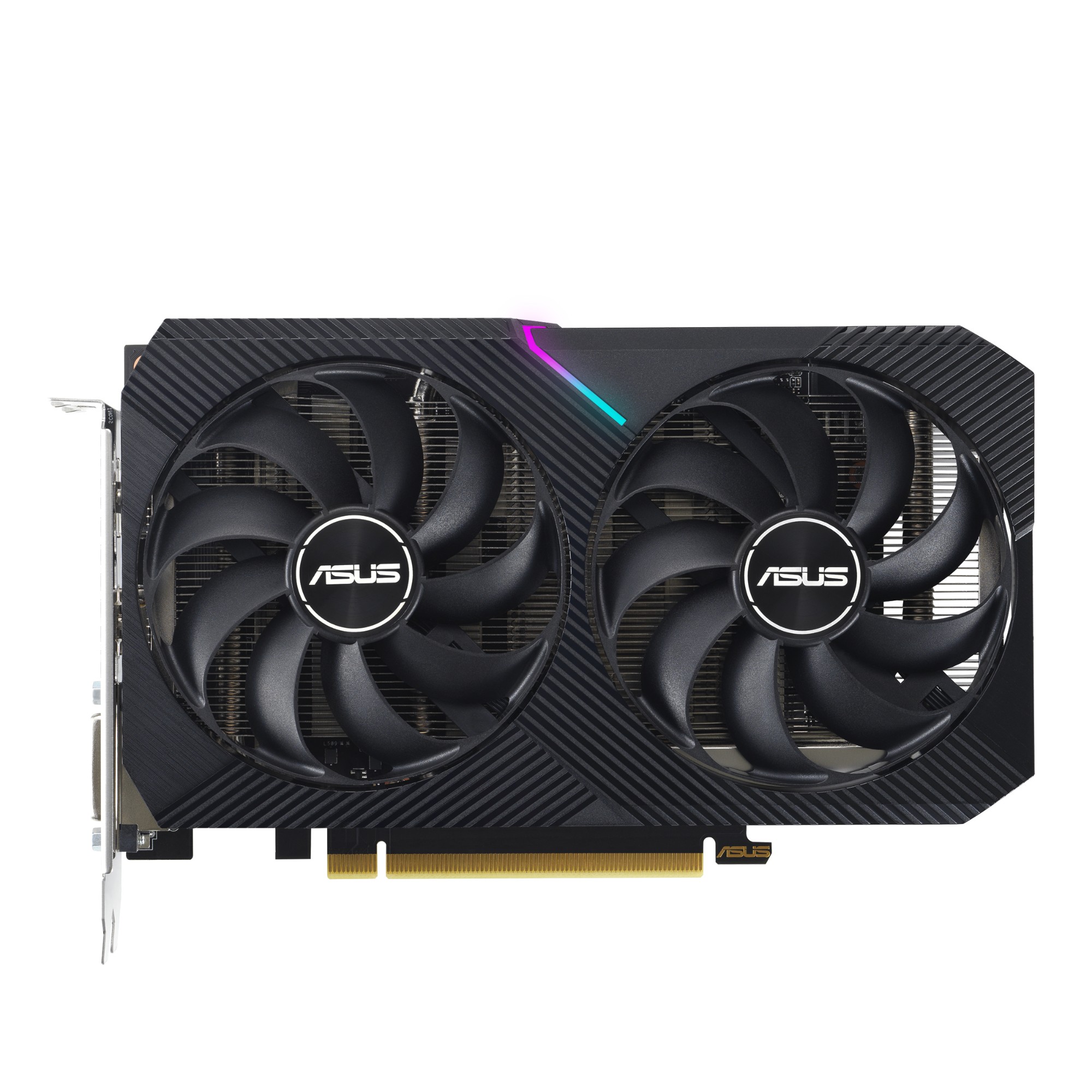
ASUS 90YV0GH6-M0NA00 ASUS Dual -RTX3050-O8G-V2 NVIDIA GeForce RTX 3050 8 GB GDDR6
2x Fans. 2x Fun.Featuring the latest NVIDIA® Ampere architecture, ASUS Dual GeForce RTX™ 3050 V2 fuses dynamic thermal performance with broad compatibility. Advanced cooling solutions from flagship graphics cards — including two Axial-tech fans for maximizing airflow to the heatsink — are packed into the 20 cm long, 2-slot card, delivering more power in less space. These enhancements make ASUS Dual the perfect choice for gamers who want heavyweight graphics performance in a compact build.Axial-tech Fan DesignBetter, faster, strongerTwo tried-and-true Axial-tech fans feature a smaller hub that facilitates longer blades and a barrier ring to increase downward air pressure.0dB TechnologyQuiet intelligenceTo eliminate unnecessary noise, a stop mode halts all fans when the GPU temp falls below 50 degrees and power consumption is low.2-slot DesignSink your heat into thisA carefully designed shroud, heatsink, and heatpipe layout allows the two Axial-tech fans to leverage chassis side-panel ventilation and deliver thermal performance that belies the card’s size.Auto-Extreme TechnologyPrecision automated manufacturingAuto-Extreme Technology is an automated manufacturing process that sets new standards in the industry by allowing all soldering to be completed in a single pass. This reduces thermal strain on components and avoids the use of harsh cleaning chemicals, resulting in less environmental impact, lower manufacturing power consumption, and a more reliable product overall.Protective BackplateThat's so metal!The PCB is reinforced by an aluminum backplate that adds structural rigidity, helping to prevent flex and protect components and trace pathways from damage.Stainless Steel BracketSteel yourselfThe mounting bracket of the Dual has been beefed up with 304 Stainless Steel that’s harder and more resistant to corrosion.GPU TWEAK IIIMonitor, tweak, and tuneThe ASUS GPU Tweak III utility takes graphics card tuning to the next level. It allows you to tweak critical parameters including GPU core clocks, memory frequency, and voltage settings, with the option to monitor everything in real-time through a customizable on-screen display. Advanced fan control is also included along with many more features to help you get the most out of your graphics card.QuantumCloudProfit from GPU powerQuantumCloud is a safe and easy-to-use application that lets you effortlessly earn extra money by sharing your graphics card’s computing power. Earnings are accessible through your PayPal or WeChat account, and QuantumCloud also supports multiple exchange methods, including Steam. In addition, QuantumCloud doesn’t collect any personal data, so your privacy stays protected. Get started right away with just one click!144-hour Validation Program“Extensive” may be an understatementA 144-hour validation program puts cards through a series of stringent tests to ensure compatibility with the latest games.Subtle LightingA bit litThe shroud features a subtle illuminated strip that creates a stylish accent for your build.NVIDIA® G-SYNC® TechnologySmooth operatorThis graphics card supports NVIDIA® G-SYNC® display technology for a super-smooth variable refresh rate experience. Enjoy AAA games without the nuisance of screen tearing or stuttering.
Part# 90YV0GH6-M0NA00
SKU S19454
In
Stock
Intel
Intel PK8071305129101 Intel Xeon w3-2425 processor 3 GHz 15 MB Smart Cache
Intel® Trusted Execution TechnologyIntel® Trusted Execution Technology for safer computing is a versatile set of hardware extensions to Intel® processors and chipsets that enhance the digital office platform with security capabilities such as measured launch and protected execution. It enables an environment where applications can run within their own space, protected from all other software on the system.Intel® Virtualization Technology for Directed I/O (VT-d)Intel® Virtualization Technology for Directed I/O (VT-d) continues from the existing support for IA-32 (VT-x) and Itanium® processor (VT-i) virtualization adding new support for I/O-device virtualization. Intel VT-d can help end users improve security and reliability of the systems and also improve performance of I/O devices in virtualized environments.Intel® Virtualization Technology (VT-x)Intel® Virtualization Technology (VT-x) allows one hardware platform to function as multiple âvirtualâ platforms. It offers improved manageability by limiting downtime and maintaining productivity by isolating computing activities into separate partitions.Intel® 64Intel® 64 architecture delivers 64-bit computing on server, workstation, desktop and mobile platforms when combined with supporting software.¹ Intel 64 architecture improves performance by allowing systems to address more than 4 GB of both virtual and physical memory.CacheCPU Cache is an area of fast memory located on the processor. Intel® Smart Cache refers to the architecture that allows all cores to dynamically share access to the last level cache.Intel® AES New InstructionsIntel® AES New Instructions (Intel® AES-NI) are a set of instructions that enable fast and secure data encryption and decryption. AES-NI are valuable for a wide range of cryptographic applications, for example: applications that perform bulk encryption/decryption, authentication, random number generation, and authenticated encryption.Intel® Turbo Boost TechnologyIntel® Turbo Boost Technology dynamically increases the processor's frequency as needed by taking advantage of thermal and power headroom to give you a burst of speed when you need it, and increased energy efficiency when you donât.Max Turbo FrequencyMax Turbo Frequency is the maximum single-core frequency at which the processor is capable of operating using Intel® Turbo Boost Technology and, if present, Intel® Turbo Boost Max Technology 3.0 and Intel® Thermal Velocity Boost. Frequency is typically measured in gigahertz (GHz), or billion cycles per second.Execute Disable BitExecute Disable Bit is a hardware-based security feature that can reduce exposure to viruses and malicious-code attacks and prevent harmful software from executing and propagating on the server or network.Intel® Hyper-Threading TechnologyIntel® Hyper-Threading Technology (Intel® HT Technology) delivers two processing threads per physical core. Highly threaded applications can get more work done in parallel, completing tasks sooner.Instruction SetAn instruction set refers to the basic set of commands and instructions that a microprocessor understands and can carry out. The value shown represents which Intelâs instruction set this processor is compatible with.Intel vPro® Platform EligibilityThe Intel vPro® platform is a set of hardware and technologies used to build business computing endpoints with premium performance, built-in security, modern manageability and platform stability.Intel® VT-x with Extended Page Tables (EPT)Intel® VT-x with Extended Page Tables (EPT), also known as Second Level Address Translation (SLAT), provides acceleration for memory intensive virtualized applications. Extended Page Tables in Intel® Virtualization Technology platforms reduces the memory and power overhead costs and increases battery life through hardware optimization of page table management.Enhanced Intel SpeedStep® TechnologyEnhanced Intel SpeedStep® Technology is an advanced means of enabling high performance while meeting the power-conservation needs of mobile systems. Conventional Intel SpeedStep® Technology switches both voltage and frequency in tandem between high and low levels in response to processor load. Enhanced Intel SpeedStep® Technology builds upon that architecture using design strategies such as Separation between Voltage and Frequency Changes, and Clock Partitioning and Recovery.Intel® Speed Shift TechnologyIntel® Speed Shift Technology uses hardware-controlled P-states to deliver dramatically quicker responsiveness with single-threaded, transient (short duration) workloads, such as web browsing, by allowing the processor to more quickly select its best operating frequency and voltage for optimal performance and power efficiency.Intel® Turbo Boost Technology 2.0 FrequencyIntel® Turbo Boost Technology 2.0 Frequency is the maximum single core frequency at which the processor is capable of operating using Intel® Turbo Boost Technology. Frequency is typically measured in gigahertz (GHz), or billion cycles per second.Intel® Software Guard Extensions (Intel® SGX)Intel® Software Guard Extensions (Intel® SGX) provide applications the ability to create hardware enforced trusted execution protection for their applicationsâ sensitive routines and data. Intel® SGX provides developers a way to partition their code and data into CPU hardened trusted execution environments (TEEâs).Intel® Deep Learning Boost (Intel® DL Boost)A new set of embedded processor technologies designed to accelerate AI deep learning use cases. It extends Intel AVX-512 with a new Vector Neural Network Instruction (VNNI) that significantly increases deep learning inference performance over previous generations.Instruction Set ExtensionsInstruction Set Extensions are additional instructions which can increase performance when the same operations are performed on multiple data objects. These can include SSE (Streaming SIMD Extensions) and AVX (Advanced Vector Extensions).Intel® Turbo Boost Max Technology 3.0 FrequencyIntel® Turbo Boost Max Technology 3.0 identifies the best performing core(s) on a processor and provides increased performance on those cores through increasing frequency as needed by taking advantage of power and thermal headroom. Intel® Turbo Boost Max Technology 3.0 frequency is the clock frequency of the CPU when running in this mode.Intel® Turbo Boost Max Technology 3.0Intel® Turbo Boost Max Technology 3.0 identifies the best performing core(s) on a processor and provides increased performance on those cores through increasing frequency as needed by taking advantage of power and thermal headroom.Intel® Total Memory EncryptionTME â Total Memory Encryption (TME) helps protect data against exposure via physical attack on memory, such as cold-boot attacks.Max # of UPI LinksIntel® Ultra Path Interconnect (UPI) links are a high speed, point-to-point interconnect bus between the processors, delivering increased bandwidth and performance over Intel® QPI.# of AVX-512 FMA UnitsIntel® Advanced Vector Extensions 512 (AVX-512), new instruction set extensions, delivering ultra-wide (512-bit) vector operations capabilities, with up to 2 FMAs (Fused Multiply Add instructions), to accelerate performance for your most demanding computational tasks.Intel® Resource Director Technology (Intel® RDT)Intel® RDT brings new levels of visibility and control over how shared resources such as last-level cache (LLC) and memory bandwidth are used by applications, virtual machines (VMs) and containers.Intel® Optane⢠Persistent Memory SupportedIntel® Optane⢠persistent memory is a revolutionary tier of non-volatile memory that sits between memory and storage to provide large, affordable memory capacity that is comparable to DRAM performance.  Delivering large system-level memory capacity when combined with traditional DRAM, Intel Optane persistent memory is helping transform critical memory constrained workloads â from cloud, databases, in-memory analytics, virtualization, and content delivery networks.Mode-based Execute Control (MBEC)Mode-based Execute Control can more reliably verify and enforce the integrity of kernel level code.Intel® Boot GuardIntel® Device Protection Technology with Boot Guard helps protect the systemâs pre-OS environment from viruses and malicious software attacks.Intel® Control-Flow Enforcement TechnologyCET - Intel Control-flow Enforcement Technology (CET) helps protect against the misuse of legitimate code snippets through return-oriented programming (ROP) control-flow hijacking attacks.Intel® Transactional Synchronization ExtensionsIntel® Transactional Synchronization Extensions (Intel® TSX) are a set of instructions that add hardware transactional memory support to improve performance of multi-threaded software.
Part# PK8071305129101
SKU S19454
In
Stock
QNAP
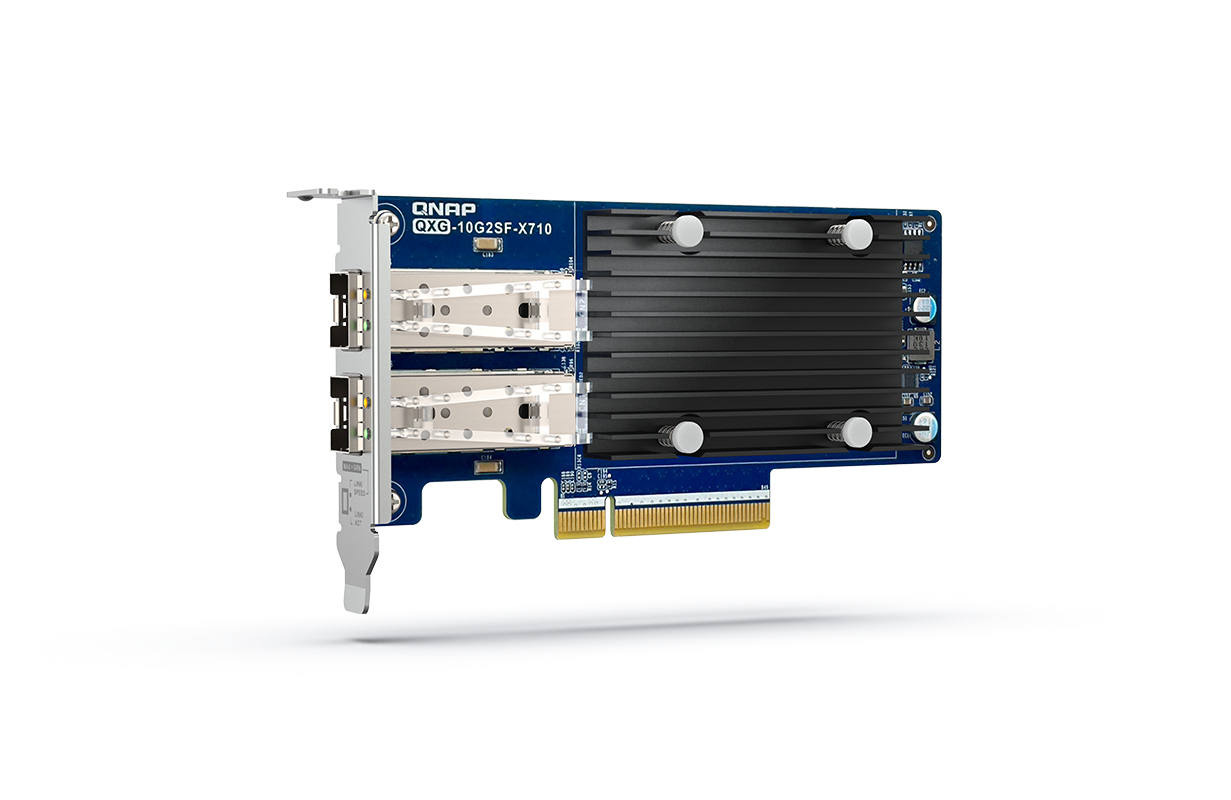
QNAP QXG-10G2SF-X710 QNAP QXG-10G2SF-X710 network card Internal
The QXG-10G2SF-X710 10 GbE network expansion card, featuring two 10 GbE SFP+ ports (10G/1G), is energy-efficient and budget-friendly. It serves as an ideal solution for teams that need concurrent data access, for photographers/videographers seeking rapid and seamless data transmission capabilities, or for latency-sensitive virtualization applications. NAS and PC The QXG-10G2SF-X710 can be installed in a QNAP NAS or Windows® PC. PCIe 3.0 Supports PCIe Gen 3 x8, compatible with PCIe Gen 4 slot. SR-IOV Improves the network performance of virtual machines. Fanless design Uses large-area, high-quality heat sinks; Perfect for use in noise-sensitive environments. LED indicators Monitor the real-time status of ports with handy LED indicators.
Part# QXG-10G2SF-X710
SKU S19454
In
Stock
AMD
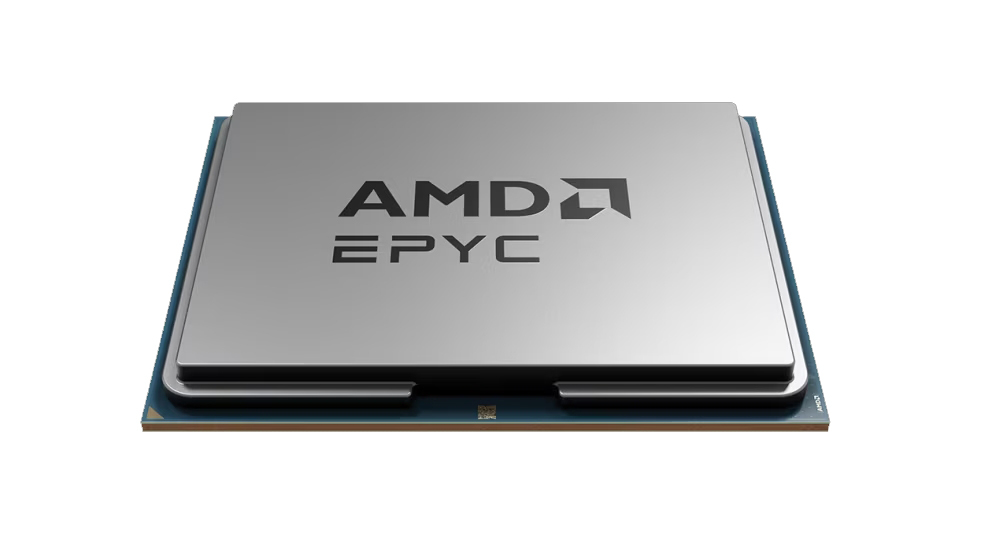
AMD 100-000001287 AMD EPYC 7203P processor 2.8 GHz 64 MB L3
AMD Infinity GuardHelp minimize potential attack surfaces as software is booted, executed, and processes your critical dataAMD Infinity ArchitectureExperience unified intelligence.
Part# 100-000001287
SKU S19454
In
Stock
AMD
AMD 100-000001288 AMD EPYC 7303 processor 2.4 GHz 64 MB L3
AMD Infinity GuardHelp minimize potential attack surfaces as software is booted, executed, and processes your critical dataAMD Infinity ArchitectureExperience unified intelligence.
Part# 100-000001288
SKU S19454
In
Stock

QNAP
QNAP TL-R1600PES-RP QNAP TL-R1600PES-RP storage drive enclosure HDD/SSD enclosure Black, Grey 2.5/3.5"
The TL-R1600PES-RP TL PCIe interface JBOD storage enclosure allows you to expand the storage capacity of a QuTS hero or QTS NAS by using SATA hard drives. Providing large data capacity and fast transfer speed, the TL-R1600PES-RP is the ideal solution for archiving/backing up virtualization applications, surveillance recordings, large data, and multimedia.2.9 PB capacityExpand up to 2.9 PB capacity for QuTS hero NAS, by connecting twelve expansion enclosures (up to 192 hard drives in total).EconomyThe TL-R1600PES-RP supports SATA hard drives, which are common, budget-friendly, and available with large capacities.Up to 64 Gb/sThe TL-R1600PES-RP features PCIe Gen 3 x8, providing up to 64 Gb/s data transfer speed.Easy setupJust connect your TL-R1600PES-RP to the host NAS to expand NAS capacity. RAID re-building on the host NAS is not required, and setup is finished within a few minutes.Host-based power managementThe TL-R1600PES-RP power on/off is linked with the host NAS.Redundant power supplyEnsures service continuity with stable and reliable power supplies.QNAP enterprise NAS with petabyte-class storageUse QNAP enterprise and all-flash QuTS hero NAS paired with multiple TL-R1600PES-RP JBODs, to obtain both breakthrough performance and massive capacity. The TL-R1600PES-RP supports SATA hard drives, providing greater choice in selecting high-capacity drives. This configuration is ideal for enterprises, science research institutions, and media production companies that require high-capacity storage for backing up or storing virtual machines, containers, and what is produced/generated by their high-performance NAS.
Part# TL-R1600PES-RP
SKU S19454
In
Stock

Item(s) added to cart

