
 0
0
Computer Components
2940 –
2950
of
4773
Availability
Sort by
Advance Filters
Limited Availability



TP-Link
TP-Link ARCHER T2U NANO TP-Link Archer T2U Nano WLAN 433 Mbit/s
Tiny Size. Powerful ConnectionAC600 Nano Wireless USB AdapterArcher T2U NanoHigh-Speed Dual Band Adapter for Better ConnectionsThe Archer T2U Nano receives WiFi signals on two separate bands. 256QAM technology increases the 2.4 GHz data rate from 150 Mbps to 200 Mbps for 33% faster performance. 433 Mbps on 5 GHz is perfect for HD video streaming and lag-free online gaming, while 200 Mbps on 2.4 GHz is perfect for web surfing with legacy devices.Miniature Design -Plug it in and forget itWith its miniature size and sleek design, users can insert the nano adapter into any USB port and leave it in there, making it perfect for home or travel useWiFi Roaming Some public WiFi networks require you to go through the hassle of constantly selecting and connecting to different networks as you move around.Connect automatically to the nearest WiFi network with the Archer T2U Nano’s WiFi Roaming for an uninterrupted network no matter where you go.
Part# ARCHER T2U NANO
SKU S19454
Limited Availability
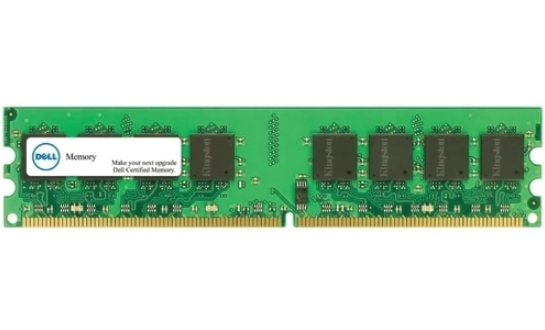
Lenovo
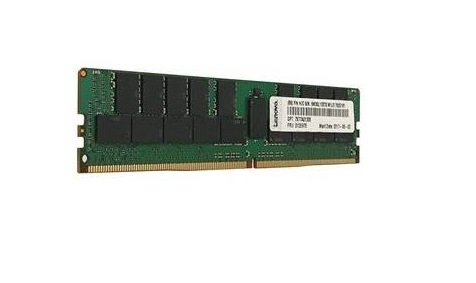
Lenovo 4ZC7A08699 Lenovo 4ZC7A08699 memory module 16 GB DDR4 2666 MHz ECC
The ST50 server supports Lenovo TruDDR4 memory. TruDDR4 memory uses the highest-quality components sourced from Tier 1 DRAM suppliers and only memory that meets strict requirements is selected. It is compatibility-tested and tuned to maximize performance and reliability.
Part# 4ZC7A08699
SKU S19454
Limited Availability
StarTech.com
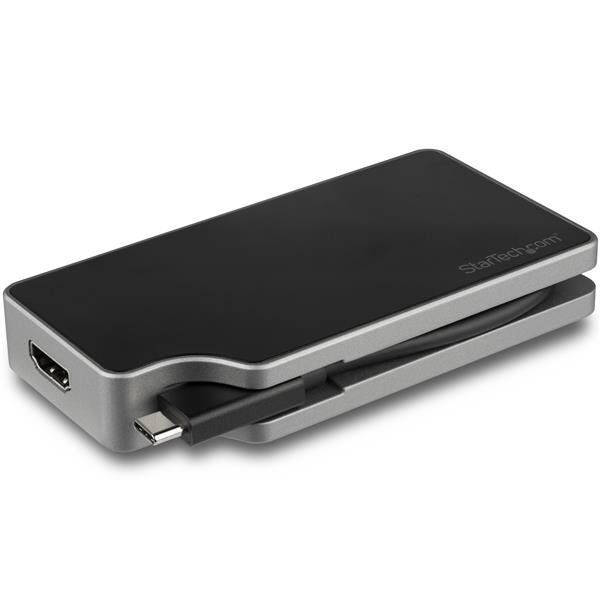
StarTech.com CDPVDHMDPDP StarTech.com USB C Multiport Video Adapter - 4K 60Hz UHD Portable 5-in-1 USB Type C to HDMI 2.0, Mini DisplayPort, VGA or DVI (1080p) - 95W PD Passthrough - Cable Management - Aluminum
USB-C to VGA DVI HDMI or mDP Travel Adapter | Aluminum| 4K 60Hz | Wrap-Around CableThis USB-C multiport video adapter offers a portable solution for connecting your USB Type-C laptop to a VGA, DVI, HDMI or Mini DisplayPort (mDP) display. It features USB Power Delivery, so you can power your laptop while outputting video using the same USB-C port.Power and Video in One PortThis USB-C adapter supports USB Power Delivery up to 95 watts and features an additional USB-C port. You can charge your laptop using its USB-C power adapter, even while you output video. Many laptops support charging through a USB-C port with Power Delivery, check your specifications to confirm compatibility.All-in-One Video Connectivity with Travel in MindCarry one adapter instead of four. This versatile 4-in-1 monitor adapter lets you connect your USB-C laptop to any display. With its durable aluminum enclosure and a magnetic retainer that secures the breakout cable in place while you’re not using it, the adapter is rugged enough to carry in your travel bag.Astonishing Picture QualityThe HDMI and mDP outputs support UHD 4K resolutions, providing four times the picture quality of high-definition 1080p. All of the outputs (HDMI, mDP, VGA, DVI) support high-definition resolutions up to 1920 x 1200. The adapter is compatible with USB-C DP Alt Mode devices.Stylish ConnectivityThe USB-C adapter has a Space Gray trim and built-in USB-C cable designed to match your Space Gray MacBook, or MacBook Pro.CDPVDHMDPDP is backed by a StarTech.com 3-year warranty and free lifetime technical support.The StarTech.com Advantage- 5-IN-1 MULTIPORT USB-C VIDEO ADAPTER: USB-C DP Alt Mode to any one of 4K 60Hz HDMI 2.0/mDP 1.2 or 1080p VGA/DVI with HDCP 2.2/1.4, Thunderbolt 3 compatible, 95W Power Delivery Pass-Through, Space Gray- 95W PD 3.0 PASS-THROUGH: Use a USB-C power adapter to charge laptop (Ultrabooks & workstations) up to 95W; prevents video drop/flickering when power is added/removed on PD 3.0 laptops like MacBook Pro- COMPATIBILITY: USB-C display adapter for TB3 MacBook Pro/Air, Dell XPS/Precision/Latitude, Lenovo ThinkPad X1 Carbon/Extreme, Surface Laptop 3/Surface Book 3, HP EliteBook/Spectre/ZBook, Chromebooks
Part# CDPVDHMDPDP
SKU S19454
Limited Availability
ASUS
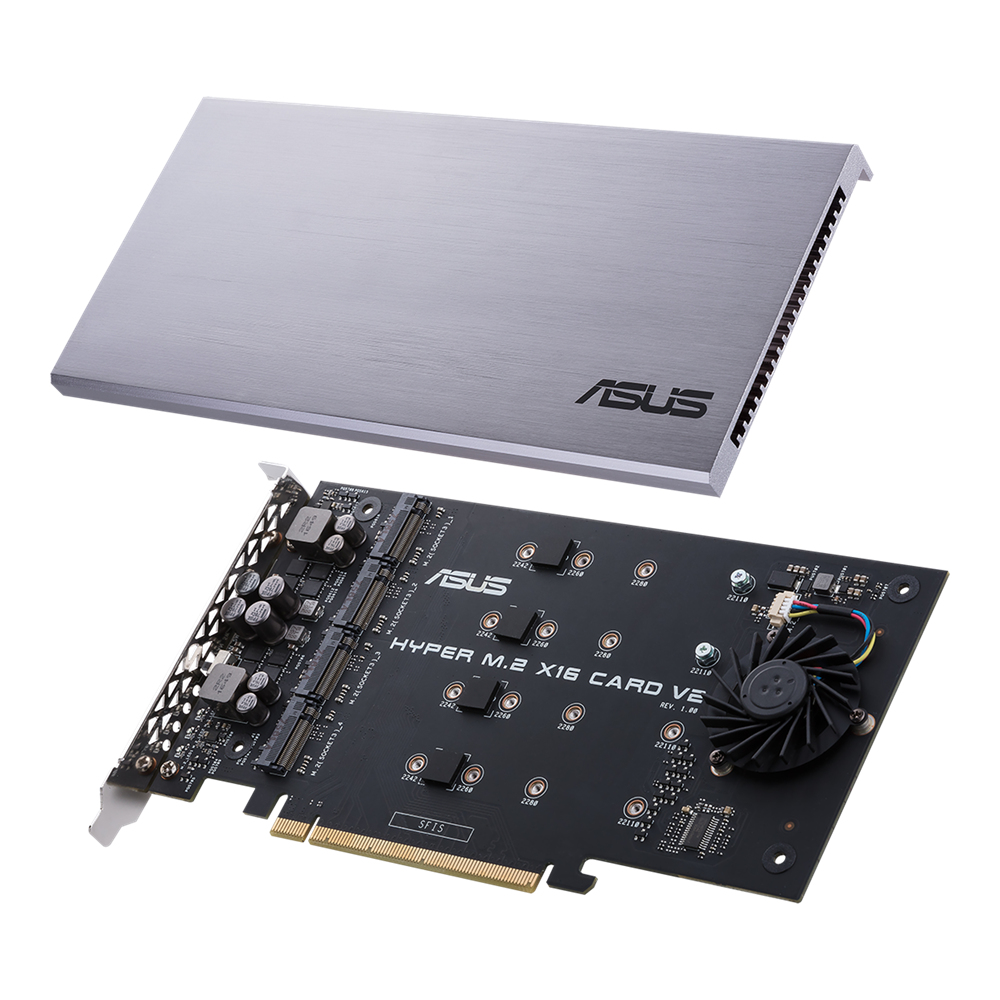
ASUS 90MC06P0-M0EAY0 ASUS HYPER M.2 X16 CARD V2 interface cards/adapter Internal
RAID on CPUHyper M.2 x 16 card V2 is compatible with Intel® Virtual RAID on CPU (VROC) and the AMD Ryzen Threadripper platform for NVMe RAID support. Unused CPU PCle lanes can be assigned to storage, allowing you to create a bootable RAID array with multiple M.2 SSDs.Design for unthrottled transfer speedThe ASUS Hyper M.2 x16 V2 card provides four M.2 slots to let you expand your system with high-performance SSD storage. Designed for the latest generation of NVMe drives, the card features an upgraded power supply that provides up to 14W of power per drive, as well as a large heatsink and active fan to ensure drives stay cool for optimum performance.One card, 4X the bandwidthHyper M.2 x16 is designed specifically for Intel Virtual RAID on CPU (VROC) and the AMD Ryzen Threadripper platform for NVMe RAID support and features four M.2 slots, providing up to 128 Gbps of bandwidth per card.
Part# 90MC06P0-M0EAY0
SKU S19454
Limited Availability
QNAP
QNAP RAM-16GDR4T0-SO-2666 QNAP RAM-16GDR4T0-SO-2666 memory module 16 GB 2 x 8 GB DDR4 2666 MHz
Part# RAM-16GDR4T0-SO-2666
SKU S19454
Limited Availability
Netgear
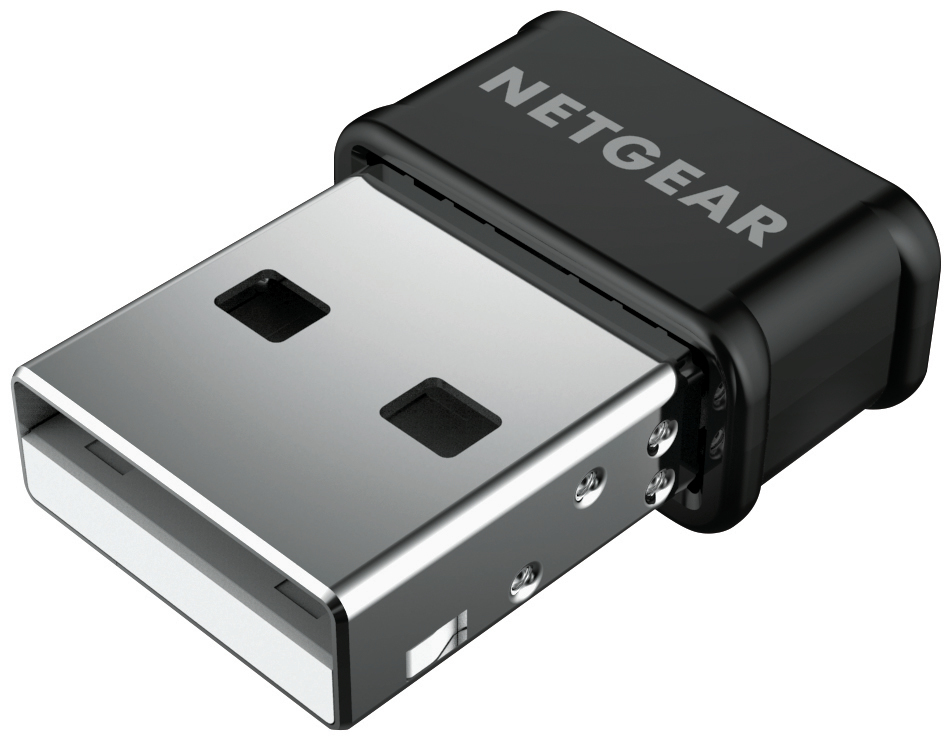
Netgear A6150-100PES NETGEAR A6150 WLAN 867 Mbit/s
Compatible with any standard WiFi router, this AC1200 Dual Band WiFi USB Mini Adapter wirelessly upgrades your Windows®-based notebook computer to AC WiFi speeds. The compact, mini designed adapter is perfect for added mobility and allows you to experience lag-free, HD streams throughout your home, with a fast, secure and reliable connection to the Internet. With up to 300/8673Mbps speed, MU-MIMO, dual band and Beamforming+, the A6150 avoids interference ensuring that you're connected with top WiFi speeds. Works with any WiFi router.
Part# A6150-100PES
SKU S19454
Limited Availability
Intel
Intel CD8069504194101 Intel Xeon 6242 processor 2.8 GHz 22 MB
Intel® Trusted Execution TechnologyIntel® Trusted Execution Technology for safer computing is a versatile set of hardware extensions to Intel® processors and chipsets that enhance the digital office platform with security capabilities such as measured launch and protected execution. It enables an environment where applications can run within their own space, protected from all other software on the system.Intel® Virtualization Technology for Directed I/O (VT-d)Intel® Virtualization Technology for Directed I/O (VT-d) continues from the existing support for IA-32 (VT-x) and Itanium® processor (VT-i) virtualization adding new support for I/O-device virtualization. Intel VT-d can help end users improve security and reliability of the systems and also improve performance of I/O devices in virtualized environments.Intel® Virtualization Technology (VT-x)Intel® Virtualization Technology (VT-x) allows one hardware platform to function as multiple âvirtualâ platforms. It offers improved manageability by limiting downtime and maintaining productivity by isolating computing activities into separate partitions.Intel® 64Intel® 64 architecture delivers 64-bit computing on server, workstation, desktop and mobile platforms when combined with supporting software.¹ Intel 64 architecture improves performance by allowing systems to address more than 4 GB of both virtual and physical memory.CacheCPU Cache is an area of fast memory located on the processor. Intel® Smart Cache refers to the architecture that allows all cores to dynamically share access to the last level cache.Intel® AES New InstructionsIntel® AES New Instructions (Intel® AES-NI) are a set of instructions that enable fast and secure data encryption and decryption. AES-NI are valuable for a wide range of cryptographic applications, for example: applications that perform bulk encryption/decryption, authentication, random number generation, and authenticated encryption.Intel® Turbo Boost TechnologyIntel® Turbo Boost Technology dynamically increases the processor's frequency as needed by taking advantage of thermal and power headroom to give you a burst of speed when you need it, and increased energy efficiency when you donât.Max Turbo FrequencyMax Turbo Frequency is the maximum single-core frequency at which the processor is capable of operating using Intel® Turbo Boost Technology and, if present, Intel® Turbo Boost Max Technology 3.0 and Intel® Thermal Velocity Boost. Frequency is typically measured in gigahertz (GHz), or billion cycles per second.Execute Disable BitExecute Disable Bit is a hardware-based security feature that can reduce exposure to viruses and malicious-code attacks and prevent harmful software from executing and propagating on the server or network.Intel® Hyper-Threading TechnologyIntel® Hyper-Threading Technology (Intel® HT Technology) delivers two processing threads per physical core. Highly threaded applications can get more work done in parallel, completing tasks sooner.Intel vPro® Platform EligibilityThe Intel vPro® platform is a set of hardware and technologies used to build business computing endpoints with premium performance, built-in security, modern manageability and platform stability.Intel® VT-x with Extended Page Tables (EPT)Intel® VT-x with Extended Page Tables (EPT), also known as Second Level Address Translation (SLAT), provides acceleration for memory intensive virtualized applications. Extended Page Tables in Intel® Virtualization Technology platforms reduces the memory and power overhead costs and increases battery life through hardware optimization of page table management.Enhanced Intel SpeedStep® TechnologyEnhanced Intel SpeedStep® Technology is an advanced means of enabling high performance while meeting the power-conservation needs of mobile systems. Conventional Intel SpeedStep® Technology switches both voltage and frequency in tandem between high and low levels in response to processor load. Enhanced Intel SpeedStep® Technology builds upon that architecture using design strategies such as Separation between Voltage and Frequency Changes, and Clock Partitioning and Recovery.Intel® Speed Shift TechnologyIntel® Speed Shift Technology uses hardware-controlled P-states to deliver dramatically quicker responsiveness with single-threaded, transient (short duration) workloads, such as web browsing, by allowing the processor to more quickly select its best operating frequency and voltage for optimal performance and power efficiency.Intel® Deep Learning Boost (Intel® DL Boost) on CPUA new set of embedded processor technologies designed to accelerate AI deep learning use cases. It extends Intel AVX-512 with a new Vector Neural Network Instruction (VNNI) that significantly increases deep learning inference performance over previous generations.Instruction Set ExtensionsInstruction Set Extensions are additional instructions which can increase performance when the same operations are performed on multiple data objects. These can include SSE (Streaming SIMD Extensions) and AVX (Advanced Vector Extensions).Intel® Run Sure TechnologyIntel® Run Sure Technology, includes advanced RAS (reliability, availability and serviceability) features that deliver high reliability and platform resiliency, to maximize uptime of servers running mission-critical workloads.Intel® Turbo Boost Max Technology 3.0Intel® Turbo Boost Max Technology 3.0 identifies the best performing core(s) on a processor and provides increased performance on those cores through increasing frequency as needed by taking advantage of power and thermal headroom.Max # of UPI LinksIntel® Ultra Path Interconnect (UPI) links are a high speed, point-to-point interconnect bus between the processors, delivering increased bandwidth and performance over Intel® QPI.# of AVX-512 FMA UnitsIntel® Advanced Vector Extensions 512 (AVX-512), new instruction set extensions, delivering ultra-wide (512-bit) vector operations capabilities, with up to 2 FMAs (Fused Multiply Add instructions), to accelerate performance for your most demanding computational tasks.Intel® Resource Director Technology (Intel® RDT)Intel® RDT brings new levels of visibility and control over how shared resources such as last-level cache (LLC) and memory bandwidth are used by applications, virtual machines (VMs) and containers.Intel® Speed Select Technology - Performance ProfileA capability to configure the processor to run at three distinct operating points.Intel® Speed Select Technology - Base FrequencyEnables users to increase guaranteed base frequency on certain cores (high priority cores) in exchange for lower base frequency on remaining cores (low priority cores). Improves overall performance by boosting frequency on critical cores.Intel® Volume Management Device (VMD)Intel® Volume Management Device (VMD) provides a common, robust method of hot plug and LED management for NVMe-based solid state drives.Intel® Optane⢠Persistent Memory SupportedIntel® Optane⢠persistent memory is a revolutionary tier of non-volatile memory that sits between memory and storage to provide large, affordable memory capacity that is comparable to DRAM performance.  Delivering large system-level memory capacity when combined with traditional DRAM, Intel Optane persistent memory is helping transform critical memory constrained workloads â from cloud, databases, in-memory analytics, virtualization, and content delivery networks.Mode-based Execute Control (MBEC)Mode-based Execute Control can more reliably verify and enforce the integrity of kernel level code.Intel® Transactional Synchronization ExtensionsIntel® Transactional Synchronization Extensions (Intel® TSX) are a set of instructions that add hardware transactional memory support to improve performance of multi-threaded software.
Part# CD8069504194101
SKU S19454
Limited Availability
Intel
Intel CD8069504194202 Intel Xeon 6244 processor 3.6 GHz 24.75 MB
Intel® Trusted Execution TechnologyIntel® Trusted Execution Technology for safer computing is a versatile set of hardware extensions to Intel® processors and chipsets that enhance the digital office platform with security capabilities such as measured launch and protected execution. It enables an environment where applications can run within their own space, protected from all other software on the system.Intel® Virtualization Technology for Directed I/O (VT-d)Intel® Virtualization Technology for Directed I/O (VT-d) continues from the existing support for IA-32 (VT-x) and Itanium® processor (VT-i) virtualization adding new support for I/O-device virtualization. Intel VT-d can help end users improve security and reliability of the systems and also improve performance of I/O devices in virtualized environments.Intel® Virtualization Technology (VT-x)Intel® Virtualization Technology (VT-x) allows one hardware platform to function as multiple âvirtualâ platforms. It offers improved manageability by limiting downtime and maintaining productivity by isolating computing activities into separate partitions.Intel® 64Intel® 64 architecture delivers 64-bit computing on server, workstation, desktop and mobile platforms when combined with supporting software.¹ Intel 64 architecture improves performance by allowing systems to address more than 4 GB of both virtual and physical memory.CacheCPU Cache is an area of fast memory located on the processor. Intel® Smart Cache refers to the architecture that allows all cores to dynamically share access to the last level cache.Intel® AES New InstructionsIntel® AES New Instructions (Intel® AES-NI) are a set of instructions that enable fast and secure data encryption and decryption. AES-NI are valuable for a wide range of cryptographic applications, for example: applications that perform bulk encryption/decryption, authentication, random number generation, and authenticated encryption.Intel® Turbo Boost TechnologyIntel® Turbo Boost Technology dynamically increases the processor's frequency as needed by taking advantage of thermal and power headroom to give you a burst of speed when you need it, and increased energy efficiency when you donât.Max Turbo FrequencyMax Turbo Frequency is the maximum single-core frequency at which the processor is capable of operating using Intel® Turbo Boost Technology and, if present, Intel® Turbo Boost Max Technology 3.0 and Intel® Thermal Velocity Boost. Frequency is typically measured in gigahertz (GHz), or billion cycles per second.Execute Disable BitExecute Disable Bit is a hardware-based security feature that can reduce exposure to viruses and malicious-code attacks and prevent harmful software from executing and propagating on the server or network.Intel® Hyper-Threading TechnologyIntel® Hyper-Threading Technology (Intel® HT Technology) delivers two processing threads per physical core. Highly threaded applications can get more work done in parallel, completing tasks sooner.Intel vPro® Platform EligibilityThe Intel vPro® platform is a set of hardware and technologies used to build business computing endpoints with premium performance, built-in security, modern manageability and platform stability.Intel® VT-x with Extended Page Tables (EPT)Intel® VT-x with Extended Page Tables (EPT), also known as Second Level Address Translation (SLAT), provides acceleration for memory intensive virtualized applications. Extended Page Tables in Intel® Virtualization Technology platforms reduces the memory and power overhead costs and increases battery life through hardware optimization of page table management.Enhanced Intel SpeedStep® TechnologyEnhanced Intel SpeedStep® Technology is an advanced means of enabling high performance while meeting the power-conservation needs of mobile systems. Conventional Intel SpeedStep® Technology switches both voltage and frequency in tandem between high and low levels in response to processor load. Enhanced Intel SpeedStep® Technology builds upon that architecture using design strategies such as Separation between Voltage and Frequency Changes, and Clock Partitioning and Recovery.Intel® Speed Shift TechnologyIntel® Speed Shift Technology uses hardware-controlled P-states to deliver dramatically quicker responsiveness with single-threaded, transient (short duration) workloads, such as web browsing, by allowing the processor to more quickly select its best operating frequency and voltage for optimal performance and power efficiency.Intel® Deep Learning Boost (Intel® DL Boost) on CPUA new set of embedded processor technologies designed to accelerate AI deep learning use cases. It extends Intel AVX-512 with a new Vector Neural Network Instruction (VNNI) that significantly increases deep learning inference performance over previous generations.Instruction Set ExtensionsInstruction Set Extensions are additional instructions which can increase performance when the same operations are performed on multiple data objects. These can include SSE (Streaming SIMD Extensions) and AVX (Advanced Vector Extensions).Intel® Run Sure TechnologyIntel® Run Sure Technology, includes advanced RAS (reliability, availability and serviceability) features that deliver high reliability and platform resiliency, to maximize uptime of servers running mission-critical workloads.Intel® Turbo Boost Max Technology 3.0Intel® Turbo Boost Max Technology 3.0 identifies the best performing core(s) on a processor and provides increased performance on those cores through increasing frequency as needed by taking advantage of power and thermal headroom.Max # of UPI LinksIntel® Ultra Path Interconnect (UPI) links are a high speed, point-to-point interconnect bus between the processors, delivering increased bandwidth and performance over Intel® QPI.# of AVX-512 FMA UnitsIntel® Advanced Vector Extensions 512 (AVX-512), new instruction set extensions, delivering ultra-wide (512-bit) vector operations capabilities, with up to 2 FMAs (Fused Multiply Add instructions), to accelerate performance for your most demanding computational tasks.Intel® Resource Director Technology (Intel® RDT)Intel® RDT brings new levels of visibility and control over how shared resources such as last-level cache (LLC) and memory bandwidth are used by applications, virtual machines (VMs) and containers.Intel® Speed Select Technology - Performance ProfileA capability to configure the processor to run at three distinct operating points.Intel® Speed Select Technology - Base FrequencyEnables users to increase guaranteed base frequency on certain cores (high priority cores) in exchange for lower base frequency on remaining cores (low priority cores). Improves overall performance by boosting frequency on critical cores.Intel® Volume Management Device (VMD)Intel® Volume Management Device (VMD) provides a common, robust method of hot plug and LED management for NVMe-based solid state drives.Intel® Optane⢠Persistent Memory SupportedIntel® Optane⢠persistent memory is a revolutionary tier of non-volatile memory that sits between memory and storage to provide large, affordable memory capacity that is comparable to DRAM performance.  Delivering large system-level memory capacity when combined with traditional DRAM, Intel Optane persistent memory is helping transform critical memory constrained workloads â from cloud, databases, in-memory analytics, virtualization, and content delivery networks.Mode-based Execute Control (MBEC)Mode-based Execute Control can more reliably verify and enforce the integrity of kernel level code.Intel® Transactional Synchronization ExtensionsIntel® Transactional Synchronization Extensions (Intel® TSX) are a set of instructions that add hardware transactional memory support to improve performance of multi-threaded software.
Part# CD8069504194202
SKU S19454
Limited Availability
Intel
Intel CD8069504194501 Intel Xeon 6254 processor 3.1 GHz 24.75 MB
Intel® Trusted Execution TechnologyIntel® Trusted Execution Technology for safer computing is a versatile set of hardware extensions to Intel® processors and chipsets that enhance the digital office platform with security capabilities such as measured launch and protected execution. It enables an environment where applications can run within their own space, protected from all other software on the system.Intel® Virtualization Technology for Directed I/O (VT-d)Intel® Virtualization Technology for Directed I/O (VT-d) continues from the existing support for IA-32 (VT-x) and Itanium® processor (VT-i) virtualization adding new support for I/O-device virtualization. Intel VT-d can help end users improve security and reliability of the systems and also improve performance of I/O devices in virtualized environments.Intel® Virtualization Technology (VT-x)Intel® Virtualization Technology (VT-x) allows one hardware platform to function as multiple âvirtualâ platforms. It offers improved manageability by limiting downtime and maintaining productivity by isolating computing activities into separate partitions.Intel® 64Intel® 64 architecture delivers 64-bit computing on server, workstation, desktop and mobile platforms when combined with supporting software.¹ Intel 64 architecture improves performance by allowing systems to address more than 4 GB of both virtual and physical memory.CacheCPU Cache is an area of fast memory located on the processor. Intel® Smart Cache refers to the architecture that allows all cores to dynamically share access to the last level cache.Intel® AES New InstructionsIntel® AES New Instructions (Intel® AES-NI) are a set of instructions that enable fast and secure data encryption and decryption. AES-NI are valuable for a wide range of cryptographic applications, for example: applications that perform bulk encryption/decryption, authentication, random number generation, and authenticated encryption.Intel® Turbo Boost TechnologyIntel® Turbo Boost Technology dynamically increases the processor's frequency as needed by taking advantage of thermal and power headroom to give you a burst of speed when you need it, and increased energy efficiency when you donât.Max Turbo FrequencyMax Turbo Frequency is the maximum single-core frequency at which the processor is capable of operating using Intel® Turbo Boost Technology and, if present, Intel® Turbo Boost Max Technology 3.0 and Intel® Thermal Velocity Boost. Frequency is typically measured in gigahertz (GHz), or billion cycles per second.Execute Disable BitExecute Disable Bit is a hardware-based security feature that can reduce exposure to viruses and malicious-code attacks and prevent harmful software from executing and propagating on the server or network.Intel® Hyper-Threading TechnologyIntel® Hyper-Threading Technology (Intel® HT Technology) delivers two processing threads per physical core. Highly threaded applications can get more work done in parallel, completing tasks sooner.Intel vPro® Platform EligibilityThe Intel vPro® platform is a set of hardware and technologies used to build business computing endpoints with premium performance, built-in security, modern manageability and platform stability.Intel® VT-x with Extended Page Tables (EPT)Intel® VT-x with Extended Page Tables (EPT), also known as Second Level Address Translation (SLAT), provides acceleration for memory intensive virtualized applications. Extended Page Tables in Intel® Virtualization Technology platforms reduces the memory and power overhead costs and increases battery life through hardware optimization of page table management.Enhanced Intel SpeedStep® TechnologyEnhanced Intel SpeedStep® Technology is an advanced means of enabling high performance while meeting the power-conservation needs of mobile systems. Conventional Intel SpeedStep® Technology switches both voltage and frequency in tandem between high and low levels in response to processor load. Enhanced Intel SpeedStep® Technology builds upon that architecture using design strategies such as Separation between Voltage and Frequency Changes, and Clock Partitioning and Recovery.Intel® Speed Shift TechnologyIntel® Speed Shift Technology uses hardware-controlled P-states to deliver dramatically quicker responsiveness with single-threaded, transient (short duration) workloads, such as web browsing, by allowing the processor to more quickly select its best operating frequency and voltage for optimal performance and power efficiency.Intel® Deep Learning Boost (Intel® DL Boost) on CPUA new set of embedded processor technologies designed to accelerate AI deep learning use cases. It extends Intel AVX-512 with a new Vector Neural Network Instruction (VNNI) that significantly increases deep learning inference performance over previous generations.Instruction Set ExtensionsInstruction Set Extensions are additional instructions which can increase performance when the same operations are performed on multiple data objects. These can include SSE (Streaming SIMD Extensions) and AVX (Advanced Vector Extensions).Intel® Run Sure TechnologyIntel® Run Sure Technology, includes advanced RAS (reliability, availability and serviceability) features that deliver high reliability and platform resiliency, to maximize uptime of servers running mission-critical workloads.Intel® Turbo Boost Max Technology 3.0Intel® Turbo Boost Max Technology 3.0 identifies the best performing core(s) on a processor and provides increased performance on those cores through increasing frequency as needed by taking advantage of power and thermal headroom.Max # of UPI LinksIntel® Ultra Path Interconnect (UPI) links are a high speed, point-to-point interconnect bus between the processors, delivering increased bandwidth and performance over Intel® QPI.# of AVX-512 FMA UnitsIntel® Advanced Vector Extensions 512 (AVX-512), new instruction set extensions, delivering ultra-wide (512-bit) vector operations capabilities, with up to 2 FMAs (Fused Multiply Add instructions), to accelerate performance for your most demanding computational tasks.Intel® Resource Director Technology (Intel® RDT)Intel® RDT brings new levels of visibility and control over how shared resources such as last-level cache (LLC) and memory bandwidth are used by applications, virtual machines (VMs) and containers.Intel® Speed Select Technology - Performance ProfileA capability to configure the processor to run at three distinct operating points.Intel® Speed Select Technology - Base FrequencyEnables users to increase guaranteed base frequency on certain cores (high priority cores) in exchange for lower base frequency on remaining cores (low priority cores). Improves overall performance by boosting frequency on critical cores.Intel® Volume Management Device (VMD)Intel® Volume Management Device (VMD) provides a common, robust method of hot plug and LED management for NVMe-based solid state drives.Intel® Optane⢠Persistent Memory SupportedIntel® Optane⢠persistent memory is a revolutionary tier of non-volatile memory that sits between memory and storage to provide large, affordable memory capacity that is comparable to DRAM performance.  Delivering large system-level memory capacity when combined with traditional DRAM, Intel Optane persistent memory is helping transform critical memory constrained workloads â from cloud, databases, in-memory analytics, virtualization, and content delivery networks.Mode-based Execute Control (MBEC)Mode-based Execute Control can more reliably verify and enforce the integrity of kernel level code.Intel® Transactional Synchronization ExtensionsIntel® Transactional Synchronization Extensions (Intel® TSX) are a set of instructions that add hardware transactional memory support to improve performance of multi-threaded software.
Part# CD8069504194501
SKU S19454
Limited Availability

Item(s) added to cart

