
 0
0
Computer Components
3130 –
3140
of
4773
Availability
Sort by
Advance Filters
QNAP
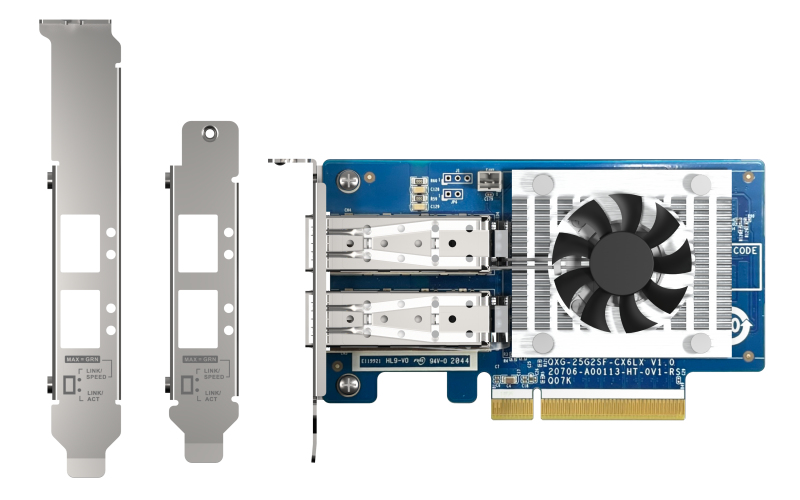
QNAP QXG-25G2SF-CX6 QNAP QXG-25G2SF-CX6 network card Internal Fiber 25000 Mbit/s
The QXG-25G2SF-CX6 features an NVIDIA Mellanox® ConnectX-6 Lx SmartNIC controller, supports PCIe Gen4 (backwards compatible with Gen3/ Gen2) and provides up to 25 Gbps transfer speeds. By using Port Trunking to combine multiple ports, up to 50GbE can be achieved for accelerating file sharing and intensive data transfer. With SR-IOV support, the QXG-25G2SF-CX6 greatly boosts network efficiency and is ideal for I/O-intensive and latency-sensitive virtualization applications and data centers.High-speed 25GbE NetworkingThe TS-h3088XU-RP supports 25GbE networking, and can be used with the QXG-25G2SF-CX6 to expand network connectivity. It can also be used with a 25GbE Switch to build a budget-friendly high-speed network environment.Supports Windows and Linux servers/workstationsBesides QNAP devices, the QXG-25G2SF-CX6 supports many platforms, including Windows 10, Windows Server, and Linux (driver required) which allows you to attain optimal business performance for a wider range of system applications and services. The higher bandwidth density with reduced links helps reduce cabling footprint and operational costs.
Part# QXG-25G2SF-CX6
SKU S19454
Limited Availability


QNAP
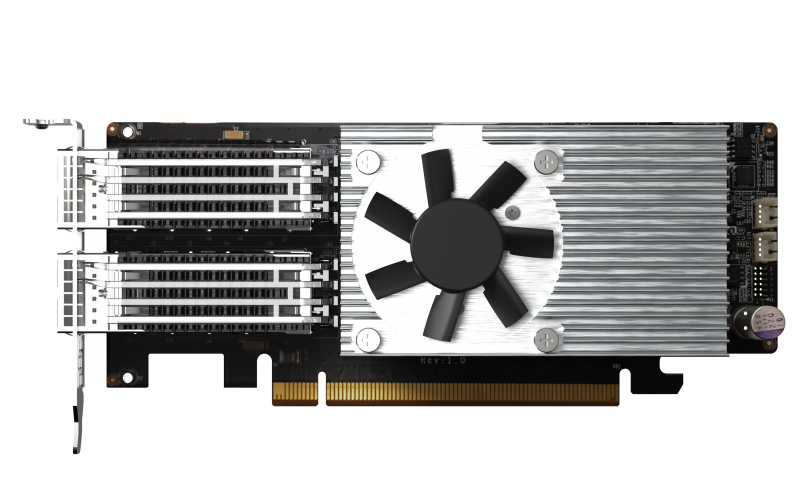
QNAP QXG-100G2SF-E810 QNAP QXG-100G2SF-E810 network card Internal Fiber 100000 Mbit/s
The dual-port QXG-100G2SF-E810 100 GbE network expansion card with Intel® Ethernet Controller E810 supports PCIe 4.0 and provides up to 100Gbps bandwidth to overcome performance bottlenecks. With iWARP/RDMA and SR-IOV support (available soon), the QXG-100G2SF-E810 greatly boosts network efficiency and is ideal for I/O-intensive and latency-sensitive virtualization and data centers. The QXG-100G2SF-E810 is a perfect match for all-flash storage to realize the highest performance potential for ever-demanding IT challenges.Ensure reliable data transfer with Forward Error Correction (FEC)The QXG-100G2SF-E810 supports FEC to overcome packet loss – a potentially common occurrence in fast, long-distance networks. FEC helps the receiving side detect and recover lost data to correct bit errors, thus ensuring reliable data transmission over “noisy” communication channels. With three FEC modes, you can use a suitable cable and switch to build an optimal network environment.Pair with high-speed switches for high-performance, low-latency data centersThe QXG-100G2SF-E810 network expansion card can be connected to a switch either with a QSFP28 cable or a QSFP28 to (4) SFP28 cable. You can also configure network redundancy to achieve network failover via the switch for continuous service and high availability.Unleash the full potential of the NVMe all-flash TS-h2490FUSupporting twenty-four (24) U.2 NVMe Gen 3 x4 SSDs, QNAP’s flagship TS-h2490FU NVMe all-flash storage features a PCIe Gen 4 x16 slot that enables the QXG-100G2SF-E810 to fully realize 100Gbps performance and eliminate bottlenecks in modern data centers, virtualization, cloud applications, and mission-critical backup/restore tasks.Supports Windows and Linux servers/workstationsBesides QNAP devices, the QXG-100G2SF-E810 supports many platforms (including Windows 10, Windows Server, and Linux/Ubuntu) allowing you to attain optimal business performance for a wider range of system applications and services. The higher bandwidth density with reduction in links helps reduce cabling footprint and operational costs.
Part# QXG-100G2SF-E810
SKU S19454
Limited Availability
Broadcom
Broadcom BCM95720A2003AC Broadcom BCM5720-2P Internal Ethernet 1000 Mbit/s
Part# BCM95720A2003AC
SKU S19454
Limited Availability
iiyama
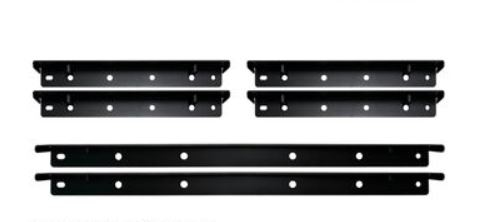
iiyama OMK4-2 iiyama OMK4-2 mounting kit
iiyama OMK4-2. Package width: 568 mm, Package depth: 196 mm, Package height: 300 mm
Part# OMK4-2
SKU S19454
Limited Availability
QNAP
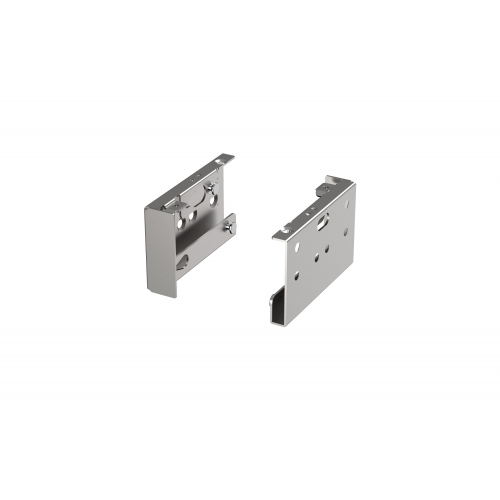
QNAP SP-EAR-QSW2FOR1-01 QNAP SP-EAR-QSW2FOR1-01 rack accessory Mounting kit
Part# SP-EAR-QSW2FOR1-01
SKU S19454
Limited Availability
Intel
Intel CD8068904665802 Intel Xeon Gold 5315Y processor 3.2 GHz 12 MB
Intel® Trusted Execution TechnologyIntel® Trusted Execution Technology for safer computing is a versatile set of hardware extensions to Intel® processors and chipsets that enhance the digital office platform with security capabilities such as measured launch and protected execution. It enables an environment where applications can run within their own space, protected from all other software on the system.Intel® Virtualization Technology for Directed I/O (VT-d)Intel® Virtualization Technology for Directed I/O (VT-d) continues from the existing support for IA-32 (VT-x) and Itanium® processor (VT-i) virtualization adding new support for I/O-device virtualization. Intel VT-d can help end users improve security and reliability of the systems and also improve performance of I/O devices in virtualized environments.Intel® Virtualization Technology (VT-x)Intel® Virtualization Technology (VT-x) allows one hardware platform to function as multiple âvirtualâ platforms. It offers improved manageability by limiting downtime and maintaining productivity by isolating computing activities into separate partitions.Intel® 64Intel® 64 architecture delivers 64-bit computing on server, workstation, desktop and mobile platforms when combined with supporting software.¹ Intel 64 architecture improves performance by allowing systems to address more than 4 GB of both virtual and physical memory.CacheCPU Cache is an area of fast memory located on the processor. Intel® Smart Cache refers to the architecture that allows all cores to dynamically share access to the last level cache.Intel® AES New InstructionsIntel® AES New Instructions (Intel® AES-NI) are a set of instructions that enable fast and secure data encryption and decryption. AES-NI are valuable for a wide range of cryptographic applications, for example: applications that perform bulk encryption/decryption, authentication, random number generation, and authenticated encryption.Intel® Turbo Boost TechnologyIntel® Turbo Boost Technology dynamically increases the processor's frequency as needed by taking advantage of thermal and power headroom to give you a burst of speed when you need it, and increased energy efficiency when you donât.Max Turbo FrequencyMax Turbo Frequency is the maximum single-core frequency at which the processor is capable of operating using Intel® Turbo Boost Technology and, if present, Intel® Turbo Boost Max Technology 3.0 and Intel® Thermal Velocity Boost. Frequency is typically measured in gigahertz (GHz), or billion cycles per second.Execute Disable BitExecute Disable Bit is a hardware-based security feature that can reduce exposure to viruses and malicious-code attacks and prevent harmful software from executing and propagating on the server or network.Intel® Hyper-Threading TechnologyIntel® Hyper-Threading Technology (Intel® HT Technology) delivers two processing threads per physical core. Highly threaded applications can get more work done in parallel, completing tasks sooner.Intel® VT-x with Extended Page Tables (EPT)Intel® VT-x with Extended Page Tables (EPT), also known as Second Level Address Translation (SLAT), provides acceleration for memory intensive virtualized applications. Extended Page Tables in Intel® Virtualization Technology platforms reduces the memory and power overhead costs and increases battery life through hardware optimization of page table management.Intel® Speed Shift TechnologyIntel® Speed Shift Technology uses hardware-controlled P-states to deliver dramatically quicker responsiveness with single-threaded, transient (short duration) workloads, such as web browsing, by allowing the processor to more quickly select its best operating frequency and voltage for optimal performance and power efficiency.Intel® Crypto AccelerationIntel® Crypto Acceleration reduces the performance impact of pervasive encryption and increases the performance of encryption-intensive workloads including SSL web serving, 5G infrastructure, and VPN/firewalls.Intel® Software Guard Extensions (Intel® SGX)Intel® Software Guard Extensions (Intel® SGX) provide applications the ability to create hardware enforced trusted execution protection for their applicationsâ sensitive routines and data. Intel® SGX provides developers a way to partition their code and data into CPU hardened trusted execution environments (TEEâs).Intel® Speed Select Technology â Core PowerEnables flexibility for workloads that benefit from higher base frequency on a subset of the processorâs cores. While the max turbo frequency across the cores remain constant across the cores, a subset of the cores can be assigned as to run at a higher base frequency than specified, while the other cores run at lower base frequency.Intel® Speed Select Technology â Turbo FrequencyEnables flexibility for workloads that benefit from higher turbo frequency on a subset of the processorâs cores. While the base frequency remains constant across the cores, a subset of the cores can be assigned to run at a higher turbo frequency than specified, while the other cores run at lower turbo frequency.Intel® Deep Learning Boost (Intel® DL Boost) on CPUA new set of embedded processor technologies designed to accelerate AI deep learning use cases. It extends Intel AVX-512 with a new Vector Neural Network Instruction (VNNI) that significantly increases deep learning inference performance over previous generations.Instruction Set ExtensionsInstruction Set Extensions are additional instructions which can increase performance when the same operations are performed on multiple data objects. These can include SSE (Streaming SIMD Extensions) and AVX (Advanced Vector Extensions).Intel® Run Sure TechnologyIntel® Run Sure Technology, includes advanced RAS (reliability, availability and serviceability) features that deliver high reliability and platform resiliency, to maximize uptime of servers running mission-critical workloads.Intel® Total Memory EncryptionTME â Total Memory Encryption (TME) helps protect data against exposure via physical attack on memory, such as cold-boot attacks.Max # of UPI LinksIntel® Ultra Path Interconnect (UPI) links are a high speed, point-to-point interconnect bus between the processors, delivering increased bandwidth and performance over Intel® QPI.# of AVX-512 FMA UnitsIntel® Advanced Vector Extensions 512 (AVX-512), new instruction set extensions, delivering ultra-wide (512-bit) vector operations capabilities, with up to 2 FMAs (Fused Multiply Add instructions), to accelerate performance for your most demanding computational tasks.Intel® Resource Director Technology (Intel® RDT)Intel® RDT brings new levels of visibility and control over how shared resources such as last-level cache (LLC) and memory bandwidth are used by applications, virtual machines (VMs) and containers.Intel® Speed Select Technology - Performance ProfileA capability to configure the processor to run at three distinct operating points.Intel® Speed Select Technology - Base FrequencyEnables users to increase guaranteed base frequency on certain cores (high priority cores) in exchange for lower base frequency on remaining cores (low priority cores). Improves overall performance by boosting frequency on critical cores.Intel® Volume Management Device (VMD)Intel® Volume Management Device (VMD) provides a common, robust method of hot plug and LED management for NVMe-based solid state drives.Intel® Optane⢠Persistent Memory SupportedIntel® Optane⢠persistent memory is a revolutionary tier of non-volatile memory that sits between memory and storage to provide large, affordable memory capacity that is comparable to DRAM performance.  Delivering large system-level memory capacity when combined with traditional DRAM, Intel Optane persistent memory is helping transform critical memory constrained workloads â from cloud, databases, in-memory analytics, virtualization, and content delivery networks.Mode-based Execute Control (MBEC)Mode-based Execute Control can more reliably verify and enforce the integrity of kernel level code.Intel® Transactional Synchronization ExtensionsIntel® Transactional Synchronization Extensions (Intel® TSX) are a set of instructions that add hardware transactional memory support to improve performance of multi-threaded software.
Part# CD8068904665802
SKU S19454
Limited Availability
Intel
Intel CD8068904658102 Intel Xeon Silver 4309Y processor 2.8 GHz 12 MB
Intel® Trusted Execution TechnologyIntel® Trusted Execution Technology for safer computing is a versatile set of hardware extensions to Intel® processors and chipsets that enhance the digital office platform with security capabilities such as measured launch and protected execution. It enables an environment where applications can run within their own space, protected from all other software on the system.Intel® Virtualization Technology for Directed I/O (VT-d)Intel® Virtualization Technology for Directed I/O (VT-d) continues from the existing support for IA-32 (VT-x) and Itanium® processor (VT-i) virtualization adding new support for I/O-device virtualization. Intel VT-d can help end users improve security and reliability of the systems and also improve performance of I/O devices in virtualized environments.Intel® Virtualization Technology (VT-x)Intel® Virtualization Technology (VT-x) allows one hardware platform to function as multiple âvirtualâ platforms. It offers improved manageability by limiting downtime and maintaining productivity by isolating computing activities into separate partitions.Intel® 64Intel® 64 architecture delivers 64-bit computing on server, workstation, desktop and mobile platforms when combined with supporting software.¹ Intel 64 architecture improves performance by allowing systems to address more than 4 GB of both virtual and physical memory.CacheCPU Cache is an area of fast memory located on the processor. Intel® Smart Cache refers to the architecture that allows all cores to dynamically share access to the last level cache.Intel® AES New InstructionsIntel® AES New Instructions (Intel® AES-NI) are a set of instructions that enable fast and secure data encryption and decryption. AES-NI are valuable for a wide range of cryptographic applications, for example: applications that perform bulk encryption/decryption, authentication, random number generation, and authenticated encryption.Intel® Turbo Boost TechnologyIntel® Turbo Boost Technology dynamically increases the processor's frequency as needed by taking advantage of thermal and power headroom to give you a burst of speed when you need it, and increased energy efficiency when you donât.Max Turbo FrequencyMax Turbo Frequency is the maximum single-core frequency at which the processor is capable of operating using Intel® Turbo Boost Technology and, if present, Intel® Turbo Boost Max Technology 3.0 and Intel® Thermal Velocity Boost. Frequency is typically measured in gigahertz (GHz), or billion cycles per second.Execute Disable BitExecute Disable Bit is a hardware-based security feature that can reduce exposure to viruses and malicious-code attacks and prevent harmful software from executing and propagating on the server or network.Intel® Hyper-Threading TechnologyIntel® Hyper-Threading Technology (Intel® HT Technology) delivers two processing threads per physical core. Highly threaded applications can get more work done in parallel, completing tasks sooner.Intel® VT-x with Extended Page Tables (EPT)Intel® VT-x with Extended Page Tables (EPT), also known as Second Level Address Translation (SLAT), provides acceleration for memory intensive virtualized applications. Extended Page Tables in Intel® Virtualization Technology platforms reduces the memory and power overhead costs and increases battery life through hardware optimization of page table management.Intel® Speed Shift TechnologyIntel® Speed Shift Technology uses hardware-controlled P-states to deliver dramatically quicker responsiveness with single-threaded, transient (short duration) workloads, such as web browsing, by allowing the processor to more quickly select its best operating frequency and voltage for optimal performance and power efficiency.Intel® Crypto AccelerationIntel® Crypto Acceleration reduces the performance impact of pervasive encryption and increases the performance of encryption-intensive workloads including SSL web serving, 5G infrastructure, and VPN/firewalls.Intel® Software Guard Extensions (Intel® SGX)Intel® Software Guard Extensions (Intel® SGX) provide applications the ability to create hardware enforced trusted execution protection for their applicationsâ sensitive routines and data. Intel® SGX provides developers a way to partition their code and data into CPU hardened trusted execution environments (TEEâs).Intel® Deep Learning Boost (Intel® DL Boost) on CPUA new set of embedded processor technologies designed to accelerate AI deep learning use cases. It extends Intel AVX-512 with a new Vector Neural Network Instruction (VNNI) that significantly increases deep learning inference performance over previous generations.Instruction Set ExtensionsInstruction Set Extensions are additional instructions which can increase performance when the same operations are performed on multiple data objects. These can include SSE (Streaming SIMD Extensions) and AVX (Advanced Vector Extensions).Intel® Total Memory EncryptionTME â Total Memory Encryption (TME) helps protect data against exposure via physical attack on memory, such as cold-boot attacks.Max # of UPI LinksIntel® Ultra Path Interconnect (UPI) links are a high speed, point-to-point interconnect bus between the processors, delivering increased bandwidth and performance over Intel® QPI.# of AVX-512 FMA UnitsIntel® Advanced Vector Extensions 512 (AVX-512), new instruction set extensions, delivering ultra-wide (512-bit) vector operations capabilities, with up to 2 FMAs (Fused Multiply Add instructions), to accelerate performance for your most demanding computational tasks.Intel® Resource Director Technology (Intel® RDT)Intel® RDT brings new levels of visibility and control over how shared resources such as last-level cache (LLC) and memory bandwidth are used by applications, virtual machines (VMs) and containers.Intel® Speed Select Technology - Performance ProfileA capability to configure the processor to run at three distinct operating points.Intel® Volume Management Device (VMD)Intel® Volume Management Device (VMD) provides a common, robust method of hot plug and LED management for NVMe-based solid state drives.Intel® Optane⢠Persistent Memory SupportedIntel® Optane⢠persistent memory is a revolutionary tier of non-volatile memory that sits between memory and storage to provide large, affordable memory capacity that is comparable to DRAM performance.  Delivering large system-level memory capacity when combined with traditional DRAM, Intel Optane persistent memory is helping transform critical memory constrained workloads â from cloud, databases, in-memory analytics, virtualization, and content delivery networks.Mode-based Execute Control (MBEC)Mode-based Execute Control can more reliably verify and enforce the integrity of kernel level code.Intel® Transactional Synchronization ExtensionsIntel® Transactional Synchronization Extensions (Intel® TSX) are a set of instructions that add hardware transactional memory support to improve performance of multi-threaded software.
Part# CD8068904658102
SKU S19454
Limited Availability
Broadcom
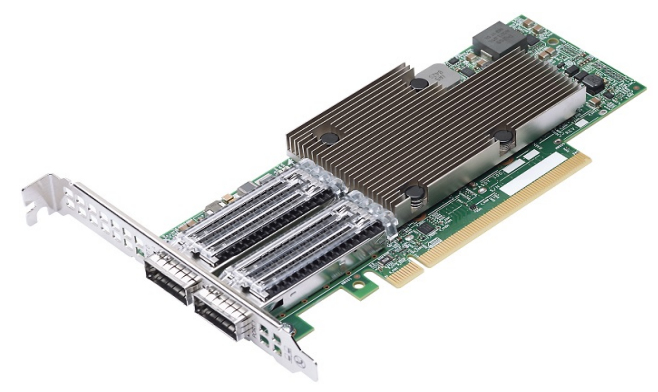
Broadcom BCM957508-P2100G Broadcom BCM957508-P2100G network card Internal Fiber 100000 Mbit/s
36 Months Service (Bring-in)
Part# BCM957508-P2100G
SKU S19454
Limited Availability
PNY
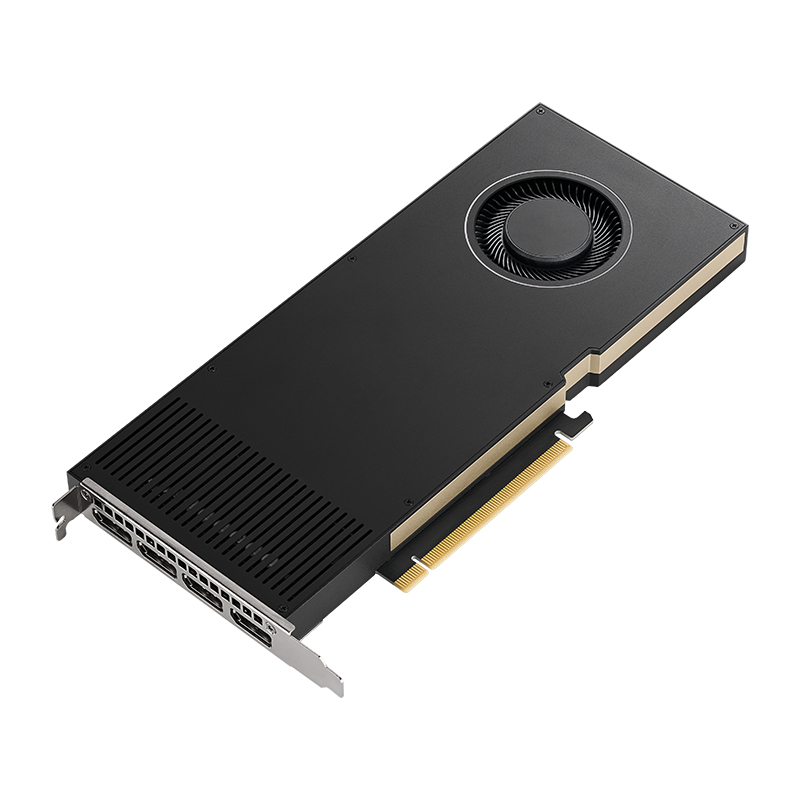
PNY VCNRTXA4000-PB PNY VCNRTXA4000-PB graphics card NVIDIA RTX A4000 16 GB GDDR6
Part# VCNRTXA4000-PB
SKU S19454
Limited Availability
PNY
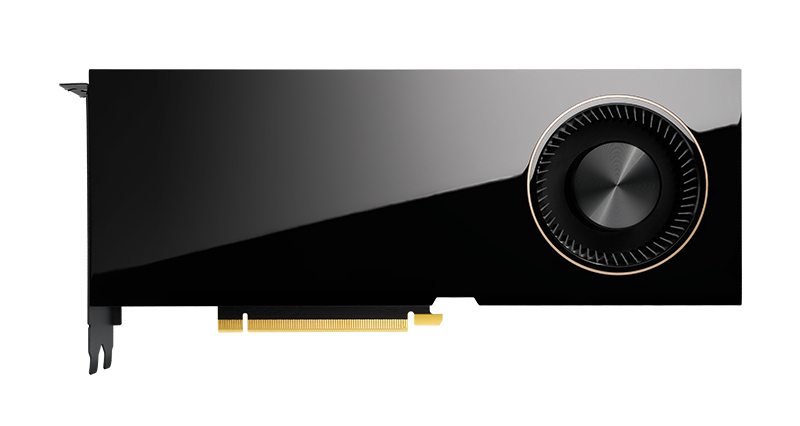
PNY VCNRTXA6000-SB PNY VCNRTXA6000-SB graphics card NVIDIA RTX A6000 48 GB GDDR6
Two years ago, the NVIDIA® Quadro RTX⢠platform revolutionized professional visual computing forever. Based on the NVIDIA Turing⢠GPU architecture and armed with real-time ray tracing, accelerated AI, and photorealistic VR, it enabled designers and engineers to do their lifeâs work at a level of quality and performance unlike ever before. But the pace of innovation and the drive to achieve new breakthroughs do not cease. And now, global circumstances have presented a new set of challenges for professionals to create, build, entertain and discover in a world that looks dramatically different than the recent past.With the introduction of the NVIDIA RTX A6000 desktop GPU, based on the NVIDIA Ampere architecture, we are putting a whole new level of performance and capabilities in the hands of professionals again. So, they are not only ready to tackle the urgent needs of today, but are superbly equipped to meet the rapidly evolving, intensive demands of tomorrow.Incredible Application Performance- Experience fast, interactive performanceâpowered by the latest NVIDIA Ampere architecture GPUâwith ultra-fast, on-board graphics memory technology and optimized software drivers for professional applications.- The NVIDIA RTX A6000 includes 84 RT Cores to accelerate photorealistic ray-traced rendering up to 80% faster than the previous generation. Hardware accelerated Motion BVH (bounding volume hierarchy) improves motion blur rendering performance by up to 7X when compared to previous generation.- With 336 Tensor Cores to accelerate AI workflows, the RTX A6000 provides the power necessary for AI development and training workloads. Incredible inferencing performance, combined with Quadro enterprise-class stability and reliability, make RTX A6000-powered desktop workstations ideal for professional AI training and inferencing deployments.- Scale application performance even more with NVIDIA NVLink technology that lets you combine two RTX A6000 cards to double the effective GPU memory and performance in a single workstation chassis to 96 GB.- NGC⢠support gives engineers, researchers, and data scientists access to NVIDIA-tuned, tested, certified, and maintained containers for the top deep learning frameworks, as well as third-party managed high-performance computing (HPC) containers, NVIDIA HPC visualization containers, and partner applications.Rich, Expansive Visual Workspace- Experience stunning imagery through movie-quality, anti-aliasing techniques, high-dynamic range (HDR) color support, higher refresh rates, and up to 8K screen resolution at 60 Hz from a single cable with the DisplayPort 1.4a standard.- Enhance your desktop workspace experience with NVIDIA Quadro View desktop management software and NVIDIA Mosaic technology. Work across four displays on every Quadro card with intuitive placement of windows, multiple virtual desktops, and user profiles.- Use advanced multi-display technologies like Quadro Sync II, Quadro Mosaic, and Quadro Warp and Blend to synchronize images and scale resolution on a display surface with multiple projectors or screens.Proven Reliability- Experience higher-quality products driven by power-efficient hardware and components selected for optimum operational performance, durability, and longevity.- Enjoy maximum uptime thanks to exhaustive product testing with leading OEMs and system integrators that simulates the most demanding real-world conditions.Easy Manageability- Remotely monitor and manage Quadro products in your enterprise by integrating the NVIDIA Enterprise Management Toolkit (NVWMI) in your IT asset management framework.- Scale up Quadro driver deployment to hundreds of workstations using NVWMIâs powerful driver installer.- Simplify software driver deployment through a regular cadence of long-life, stable driver releases based on a robust feature-development and quality-assurance process.
Part# VCNRTXA6000-SB
SKU S19454
Limited Availability

Item(s) added to cart

