
 0
0
Computer Components
4680 –
4690
of
4773
Availability
Sort by
Advance Filters
Cisco
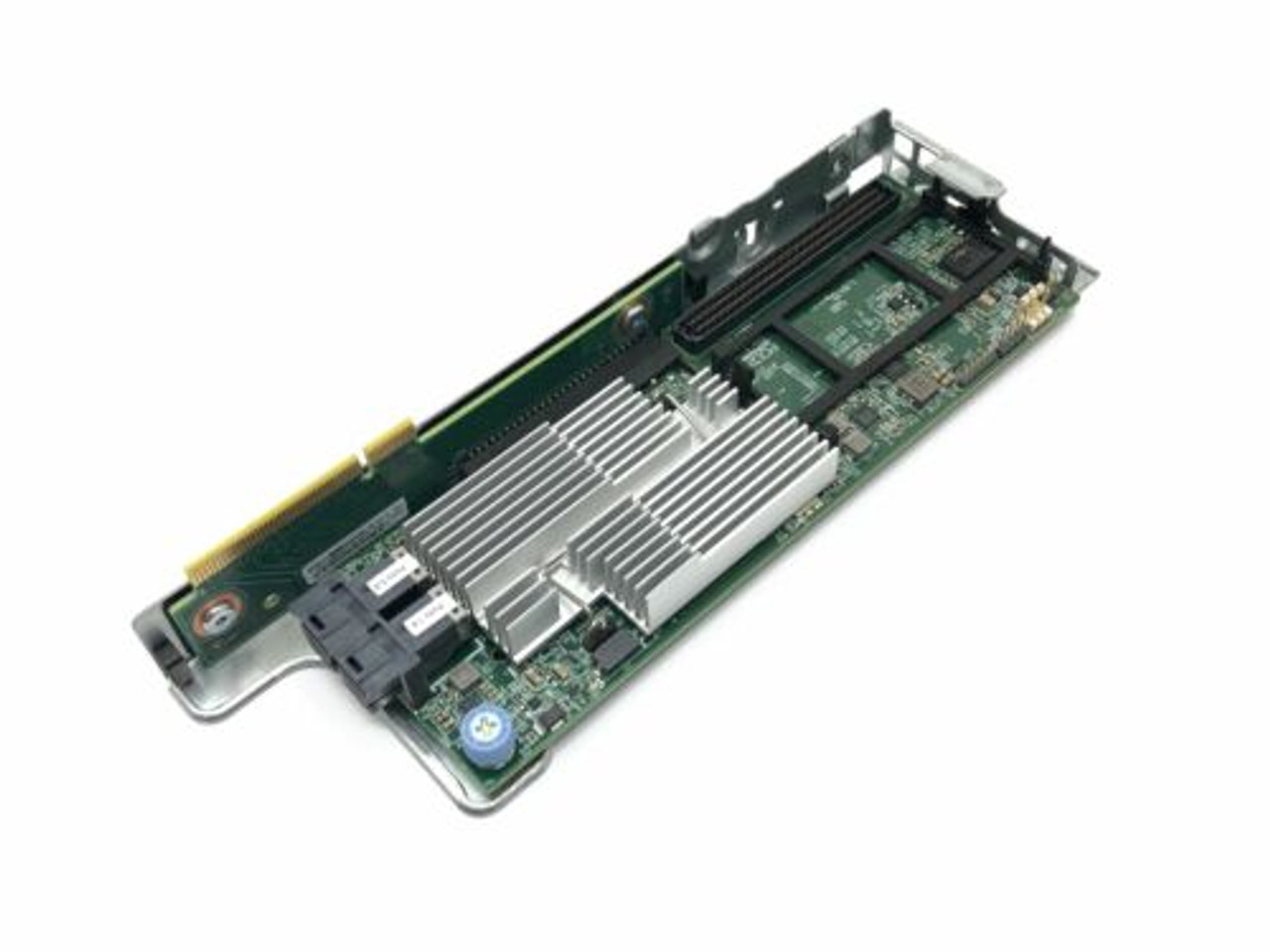
Cisco UCSC-RAID-220M6= Cisco UCSC-RAID-220M6= RAID controller 12 Gbit/s
12G SAS RAID controller with SuperCap and 4 GB FBWC
Part# UCSC-RAID-220M6=
SKU S19454
Limited Availability

Nvidia
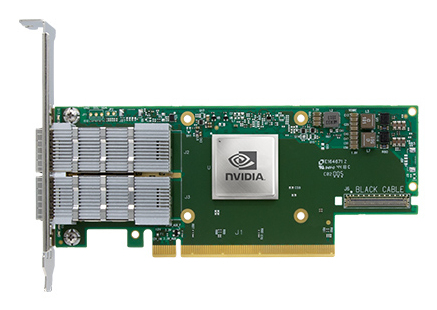
Nvidia 900-9X6AF-0056-MT0 Nvidia ConnectX-6 InfiniBand Internal Fiber 100000 Mbit/s
Featuring In-Network Computing for Enhanced Efficiency and ScalabilityComplex workloads demand ultra-fast processing of high-resolution simulations, extreme-size datasets, and highly parallelized algorithms. As these computing requirements continue to grow, NVIDIA Quantum InfiniBandâthe worldâs only fully off loadable, In-Network Computing acceleration technologyâprovides the dramatic leap in performance needed to achieve unmatched results in high performance computing (HPC), AI, and hyperscale cloud infrastructuresâwith less cost and complexity.NVIDIA® ConnectX®-6 InfiniBand smart adapter cards are a key element in the NVIDIA Quantum InfiniBand platform. ConnectX-6 provides up to two ports of 200Gb/s InfiniBand and Ethernet(1) connectivity with extremely low latency, high message rate, smart offloads, and NVIDIA In-Network Computing acceleration that improve performance and scalability.
Part# 900-9X6AF-0056-MT0
SKU S19454
Limited Availability
Nvidia
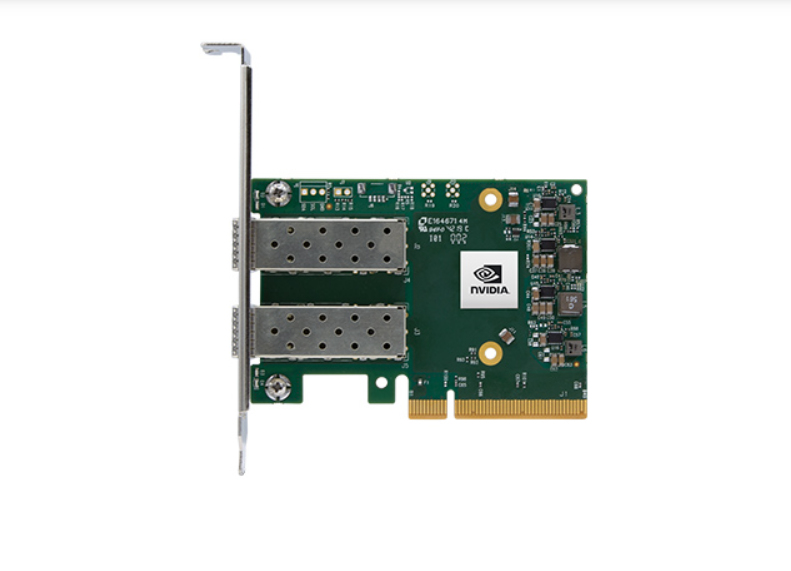
Nvidia 900-9X662-0053-ST1 Nvidia ConnectX-6 Lx Internal Ethernet 50000 Mbit/s
Dual-Port 25GbE/Single-Port 50GbE SmartNICProviding up to two ports of 25GbE or a single-port of 50GbE connectivity, and PCIe Gen 3.0/4.0 x8 host connectivity, ConnectX-6 Lx is a member of NVIDIAâs world-class, award-winning, ConnectX family of network adapters. Continuing consistent innovation in networking, ConnectX-6 Lx provides agility and efficiency at every scale. ConnectX-6 Lx delivers cutting edge 25GbE performance and security for uncompromising data centers.SDN AccelerationNVIDIA Accelerated Switching and Packet Processing® technology offloads the SDN data plane to the SmartNIC, accelerating performance and offloading the CPU in virtualized or containerized cloud data centers. Customers can accelerate their data centers with an SR-IOV or VirtIO interface while continuing to enjoy their SDN of choice.PerformanceIndustry-leading RoCEFollowing the ConnectX tradition of industry-leading RoCE capabilities, ConnectX-6 Lx enables more scalable, resilient, and easy-to-deploy RoCE solutions utilizing NVIDIA Zero Touch RoCE (ZTR). ConnectX-6 Lx allows RoCE payloads to run seamlessly on existing networks without requiring network configuration (no PFC, no ECN) for simplified RoCE deployments.ScaleSecure InfrastructureIn an era where privacy of information is key and zero trust is the rule, ConnectX-6 Lx provides supply chain protection with hardware Root-of-Trust (RoT) for Secure Boot as well as secure firmware update using RSA cryptography and cloning-protection, via a device-unique key, to guarantee firmware authenticity and unprecedented performance and scalability.
Part# 900-9X662-0053-ST1
SKU S19454
Limited Availability
Nvidia
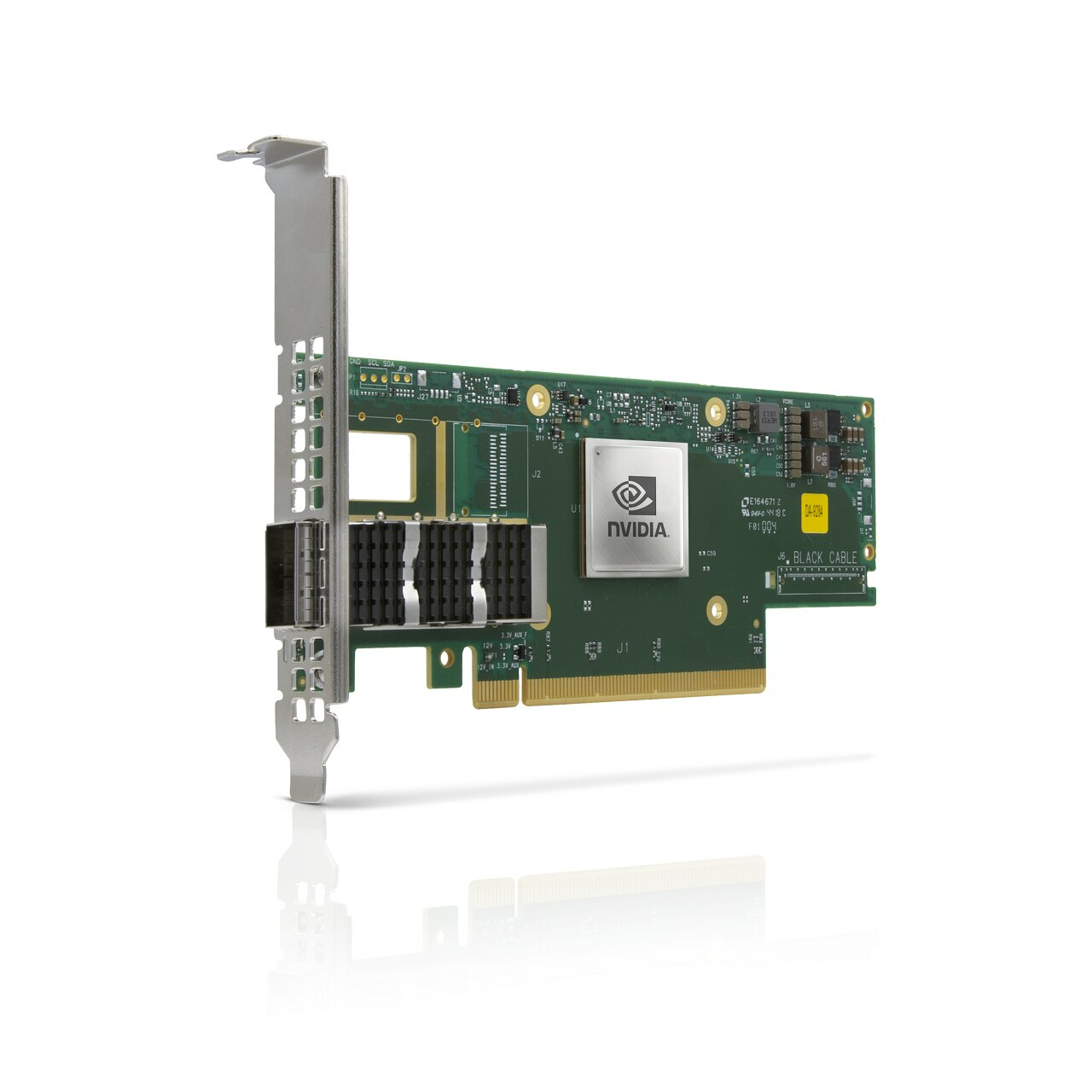
Nvidia 900-9X6AF-0016-ST2 Nvidia ConnectX-6 InfiniBand Internal Fiber 100000 Mbit/s
Featuring In-Network Computing for Enhanced Efficiency and ScalabilityComplex workloads demand ultra-fast processing of high-resolution simulations, extreme-size datasets, and highly parallelized algorithms. As these computing requirements continue to grow, NVIDIA Quantum InfiniBandâthe worldâs only fully off loadable, In-Network Computing acceleration technologyâprovides the dramatic leap in performance needed to achieve unmatched results in high performance computing (HPC), AI, and hyperscale cloud infrastructuresâwith less cost and complexity.NVIDIA® ConnectX®-6 InfiniBand smart adapter cards are a key element in the NVIDIA Quantum InfiniBand platform. ConnectX-6 provides up to two ports of 200Gb/s InfiniBand and Ethernet(1) connectivity with extremely low latency, high message rate, smart offloads, and NVIDIA In-Network Computing acceleration that improve performance and scalability.
Part# 900-9X6AF-0016-ST2
SKU S19454
Limited Availability
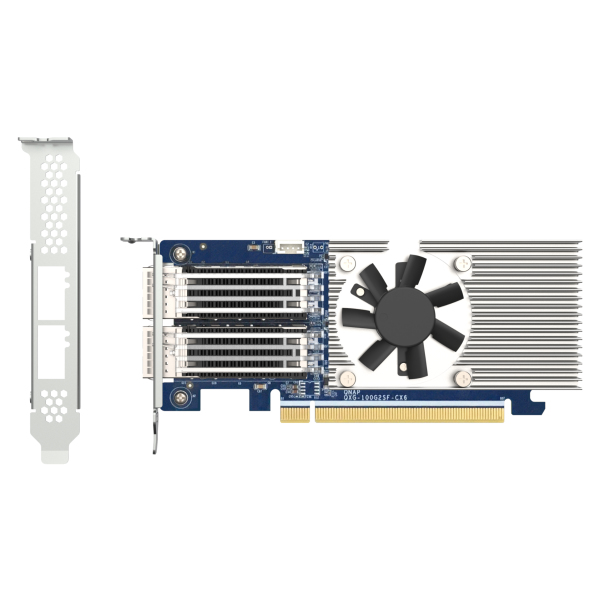
QNAP
QNAP QXG-100G2SF-CX6 QNAP QXG-100G2SF-CX6 network card Internal Fiber 100000 Mbit/s
Part# QXG-100G2SF-CX6
SKU S19454
Limited Availability
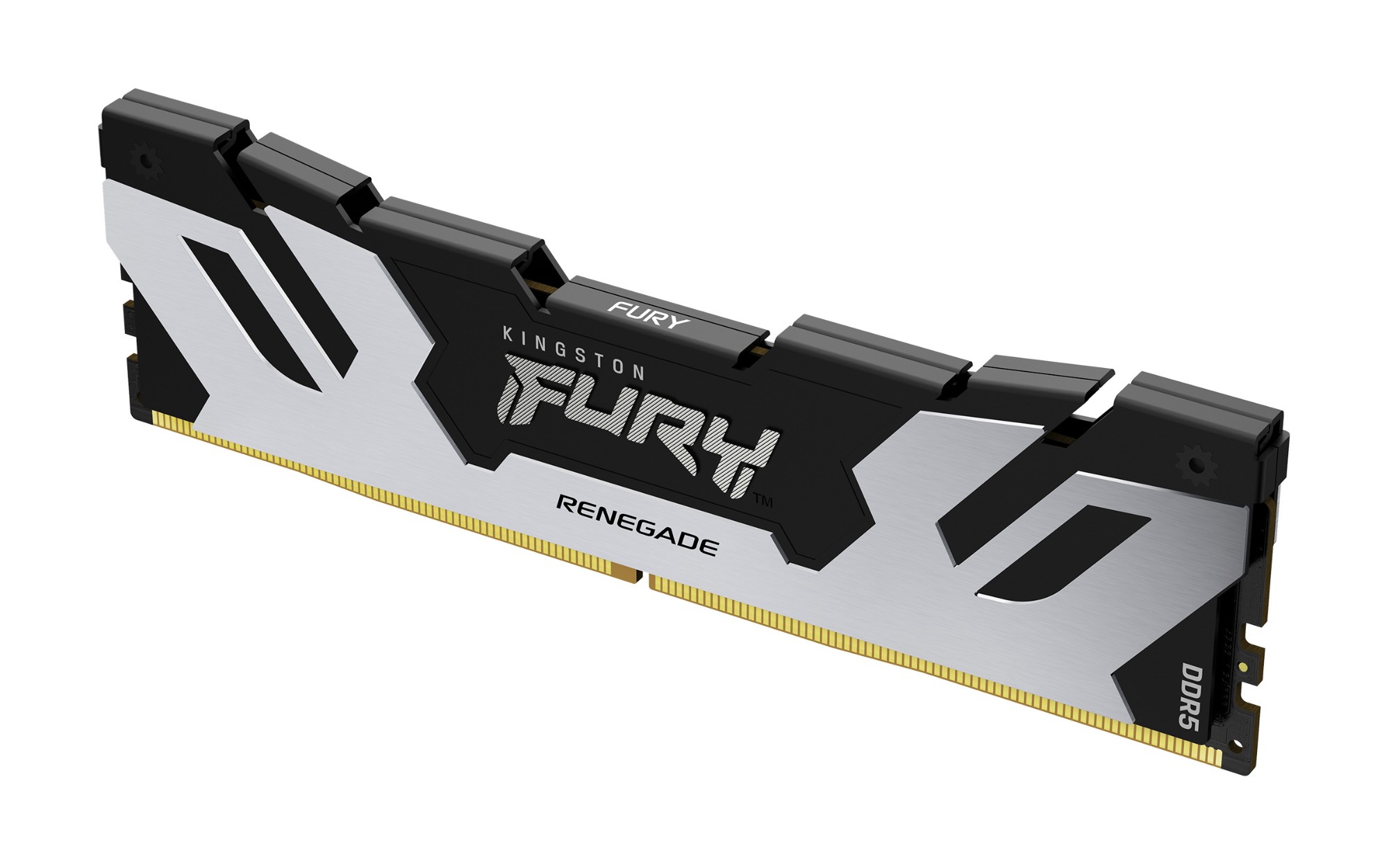
Kingston Technology
Kingston Technology KF568C36RS-16 Kingston Technology FURY 16GB 6800MT/s DDR5 CL36 DIMM Renegade Silver XMP
Kingston FURY™ Renegade DDR5 Memory - Up to 8800MT/s*Kingston FURY™ Renegade DDR5 delivers extreme performance with speeds of up to 8800MT/s*. Available as UDIMMs and CUDIMMs, they feature sleek aluminium heat spreaders in black & silver or white & silver. Modules are Intel® XMP 3.0 Certified so you can overclock with ease. Choose single modules up to 48GB or Dual Channel kits up to 96GB for next-gen gaming and PC builds. Push the limits like never before with Kingston FURY™ Renegade DDR5 memory, designed for extreme performance on next-gen DDR5 platforms. Enhance your system with UDIMM or CUDIMM module types for the boost it needs to stay on top with ultra-fast memory at up to 8000MT/s with UDIMMs and at 8800MT/s* with CUDIMMs. Kingston FURY Renegade DDR5 features sleek, newly designed aluminium heat spreaders in either black & silver or white & silver to complement the look of the latest PC builds by system builders and DIY PC enthusiasts. Available in single-module capacities of up to 48GB and dual-channel kits of 2 with capacities of up to 96GB. Engineered to maximise performanceWith UDIMM speeds up to 8000MT/s and CUDIMM speed of 8800MT/s*, Kingston FURY Renegade DDR5 features enhanced overclocking performance with improved stability at higher speeds for AI PC workloads and other rigorous computing demands.Tap into extreme overclocking potentialDDR5 ushers in a whole new era of memory technology to make extreme overclocking a more stable option than previous generations. On-die ECC delivers more reliable DRAM components, an on-board PMIC balances power when and where it’s needed, and two independent 32-bit subchannels provide dramatic increases in data efficiency for multi-core processors.Intel® XMP 3.0 certifiedIntel Extreme Memory Profile technology makes overclocking a breeze with advanced pre-optimised factory timings, speeds and voltages for overclocking performance. Kingston FURY Renegade DDR5 features a programmable PMIC for XMP 3.0, supporting up to two customisable profiles to optimise your own unique timings, speeds and voltages saved directly to the DIMM.Qualified by the world’s leading motherboard manufacturers**Tested and trusted for your preferred motherboard so you can build with confidence.Aggressive aluminium heat spreader designNewly designed black & silver and white & silver aluminium heat spreaders with black PCB keep your rig running – and looking – cool to complement the look of your latest PC build.
Part# KF568C36RS-16
SKU S19454
Limited Availability

Limited Availability
Intel
Intel CM8071504820605 Intel Core i9-13900 processor 36 MB Smart Cache
Intel® Trusted Execution TechnologyIntel® Trusted Execution Technology for safer computing is a versatile set of hardware extensions to Intel® processors and chipsets that enhance the digital office platform with security capabilities such as measured launch and protected execution. It enables an environment where applications can run within their own space, protected from all other software on the system.Intel® Virtualization Technology for Directed I/O (VT-d)Intel® Virtualization Technology for Directed I/O (VT-d) continues from the existing support for IA-32 (VT-x) and Itanium® processor (VT-i) virtualization adding new support for I/O-device virtualization. Intel VT-d can help end users improve security and reliability of the systems and also improve performance of I/O devices in virtualized environments.Intel® Virtualization Technology (VT-x)Intel® Virtualization Technology (VT-x) allows one hardware platform to function as multiple âvirtualâ platforms. It offers improved manageability by limiting downtime and maintaining productivity by isolating computing activities into separate partitions.Intel® 64Intel® 64 architecture delivers 64-bit computing on server, workstation, desktop and mobile platforms when combined with supporting software.¹ Intel 64 architecture improves performance by allowing systems to address more than 4 GB of both virtual and physical memory.Intel® Clear Video HD TechnologyIntel® Clear Video HD Technology, like its predecessor, Intel® Clear Video Technology, is a suite of image decode and processing technologies built into the integrated processor graphics that improve video playback, delivering cleaner, sharper images, more natural, accurate, and vivid colors, and a clear and stable video picture. Intel® Clear Video HD Technology adds video quality enhancements for richer color and more realistic skin tones.CacheCPU Cache is an area of fast memory located on the processor. Intel® Smart Cache refers to the architecture that allows all cores to dynamically share access to the last level cache.Intel® AES New InstructionsIntel® AES New Instructions (Intel® AES-NI) are a set of instructions that enable fast and secure data encryption and decryption. AES-NI are valuable for a wide range of cryptographic applications, for example: applications that perform bulk encryption/decryption, authentication, random number generation, and authenticated encryption.Idle StatesIdle States (C-states) are used to save power when the processor is idle. C0 is the operational state, meaning that the CPU is doing useful work. C1 is the first idle state, C2 the second, and so on, where more power saving actions are taken for numerically higher C-states.Intel® Turbo Boost TechnologyIntel® Turbo Boost Technology dynamically increases the processor's frequency as needed by taking advantage of thermal and power headroom to give you a burst of speed when you need it, and increased energy efficiency when you donât.Max Turbo FrequencyMax Turbo Frequency is the maximum single-core frequency at which the processor is capable of operating using Intel® Turbo Boost Technology and, if present, Intel® Turbo Boost Max Technology 3.0 and Intel® Thermal Velocity Boost. Frequency is typically measured in gigahertz (GHz), or billion cycles per second.Execute Disable BitExecute Disable Bit is a hardware-based security feature that can reduce exposure to viruses and malicious-code attacks and prevent harmful software from executing and propagating on the server or network.Intel® Hyper-Threading TechnologyIntel® Hyper-Threading Technology (Intel® HT Technology) delivers two processing threads per physical core. Highly threaded applications can get more work done in parallel, completing tasks sooner.Instruction SetAn instruction set refers to the basic set of commands and instructions that a microprocessor understands and can carry out. The value shown represents which Intelâs instruction set this processor is compatible with.Intel® Quick Sync VideoIntel® Quick Sync Video delivers fast conversion of video for portable media players, online sharing, and video editing and authoring.Intel vPro® Platform EligibilityThe Intel vPro® platform is a set of hardware and technologies used to build business computing endpoints with premium performance, built-in security, modern manageability and platform stability.Intel® VT-x with Extended Page Tables (EPT)Intel® VT-x with Extended Page Tables (EPT), also known as Second Level Address Translation (SLAT), provides acceleration for memory intensive virtualized applications. Extended Page Tables in Intel® Virtualization Technology platforms reduces the memory and power overhead costs and increases battery life through hardware optimization of page table management.Enhanced Intel SpeedStep® TechnologyEnhanced Intel SpeedStep® Technology is an advanced means of enabling high performance while meeting the power-conservation needs of mobile systems. Conventional Intel SpeedStep® Technology switches both voltage and frequency in tandem between high and low levels in response to processor load. Enhanced Intel SpeedStep® Technology builds upon that architecture using design strategies such as Separation between Voltage and Frequency Changes, and Clock Partitioning and Recovery.Secure KeyIntel® Secure Key consists of a digital random number generator that creates truly random numbers to strengthen encryption algorithms.Intel® Speed Shift TechnologyIntel® Speed Shift Technology uses hardware-controlled P-states to deliver dramatically quicker responsiveness with single-threaded, transient (short duration) workloads, such as web browsing, by allowing the processor to more quickly select its best operating frequency and voltage for optimal performance and power efficiency.Intel® Deep Learning Boost (Intel® DL Boost) on CPUA new set of embedded processor technologies designed to accelerate AI deep learning use cases. It extends Intel AVX-512 with a new Vector Neural Network Instruction (VNNI) that significantly increases deep learning inference performance over previous generations.Instruction Set ExtensionsInstruction Set Extensions are additional instructions which can increase performance when the same operations are performed on multiple data objects. These can include SSE (Streaming SIMD Extensions) and AVX (Advanced Vector Extensions).Intel® Thermal Velocity Boost FrequencyIntel® Thermal Velocity Boost (Intel® TVB) is a feature that opportunistically and automatically increases clock frequency above single-core and multi-core Intel® Turbo Boost Technology frequencies based on how much the processor is operating below its maximum temperature and whether turbo power budget is available. The frequency gain and duration is dependent on the workload, capabilities of the processor and the processor cooling solution.Intel® Turbo Boost Max Technology 3.0 FrequencyIntel® Turbo Boost Max Technology 3.0 identifies the best performing core(s) on a processor and provides increased performance on those cores through increasing frequency as needed by taking advantage of power and thermal headroom. Intel® Turbo Boost Max Technology 3.0 frequency is the clock frequency of the CPU when running in this mode.Intel® Turbo Boost Max Technology 3.0Intel® Turbo Boost Max Technology 3.0 identifies the best performing core(s) on a processor and provides increased performance on those cores through increasing frequency as needed by taking advantage of power and thermal headroom.Thermal Monitoring TechnologiesThermal Monitoring Technologies protect the processor package and the system from thermal failure through several thermal management features. An on-die Digital Thermal Sensor (DTS) detects the core's temperature, and the thermal management features reduce package power consumption and thereby temperature when required in order to remain within normal operating limits.Intel® Thermal Velocity BoostIntel® Thermal Velocity Boost (Intel® TVB) is a feature that opportunistically and automatically increases clock frequency above single-core and multi-core Intel® Turbo Boost Technology frequencies based on how much the processor is operating below its maximum temperature and whether turbo power budget is available. The frequency gain and duration is dependent on the workload, capabilities of the processor and the processor cooling solution.Intel® Volume Management Device (VMD)Intel® Volume Management Device (VMD) provides a common, robust method of hot plug and LED management for NVMe-based solid state drives.Intel® Gaussian & Neural AcceleratorIntel® Gaussian & Neural Accelerator (GNA) is an ultra-low power accelerator block designed to run audio and speed-centric AI workloads. Intel® GNA is designed to run audio based neural networks at ultra-low power, while simultaneously relieving the CPU of this workload.Mode-based Execute Control (MBEC)Mode-based Execute Control can more reliably verify and enforce the integrity of kernel level code.Intel® Stable IT Platform Program (SIPP)The Intel® Stable IT Platform Program (Intel® SIPP) aims for zero changes to key platform components and drivers for at least 15 months or until the next generational release, reducing complexity for IT to effectively manage their computing endpoints.Intel® Boot GuardIntel® Device Protection Technology with Boot Guard helps protect the systemâs pre-OS environment from viruses and malicious software attacks.Intel® Control-Flow Enforcement TechnologyCET - Intel Control-flow Enforcement Technology (CET) helps protect against the misuse of legitimate code snippets through return-oriented programming (ROP) control-flow hijacking attacks.
Part# CM8071504820605
SKU S19454
Limited Availability

Intel
Intel CM8071505092601 Intel Core i5-13600T processor 24 MB Smart Cache
Intel® Trusted Execution TechnologyIntel® Trusted Execution Technology for safer computing is a versatile set of hardware extensions to Intel® processors and chipsets that enhance the digital office platform with security capabilities such as measured launch and protected execution. It enables an environment where applications can run within their own space, protected from all other software on the system.Intel® Virtualization Technology for Directed I/O (VT-d)Intel® Virtualization Technology for Directed I/O (VT-d) continues from the existing support for IA-32 (VT-x) and Itanium® processor (VT-i) virtualization adding new support for I/O-device virtualization. Intel VT-d can help end users improve security and reliability of the systems and also improve performance of I/O devices in virtualized environments.Intel® Virtualization Technology (VT-x)Intel® Virtualization Technology (VT-x) allows one hardware platform to function as multiple âvirtualâ platforms. It offers improved manageability by limiting downtime and maintaining productivity by isolating computing activities into separate partitions.Intel® 64Intel® 64 architecture delivers 64-bit computing on server, workstation, desktop and mobile platforms when combined with supporting software.¹ Intel 64 architecture improves performance by allowing systems to address more than 4 GB of both virtual and physical memory.Intel® Clear Video HD TechnologyIntel® Clear Video HD Technology, like its predecessor, Intel® Clear Video Technology, is a suite of image decode and processing technologies built into the integrated processor graphics that improve video playback, delivering cleaner, sharper images, more natural, accurate, and vivid colors, and a clear and stable video picture. Intel® Clear Video HD Technology adds video quality enhancements for richer color and more realistic skin tones.CacheCPU Cache is an area of fast memory located on the processor. Intel® Smart Cache refers to the architecture that allows all cores to dynamically share access to the last level cache.Intel® AES New InstructionsIntel® AES New Instructions (Intel® AES-NI) are a set of instructions that enable fast and secure data encryption and decryption. AES-NI are valuable for a wide range of cryptographic applications, for example: applications that perform bulk encryption/decryption, authentication, random number generation, and authenticated encryption.Idle StatesIdle States (C-states) are used to save power when the processor is idle. C0 is the operational state, meaning that the CPU is doing useful work. C1 is the first idle state, C2 the second, and so on, where more power saving actions are taken for numerically higher C-states.Intel® Turbo Boost TechnologyIntel® Turbo Boost Technology dynamically increases the processor's frequency as needed by taking advantage of thermal and power headroom to give you a burst of speed when you need it, and increased energy efficiency when you donât.Max Turbo FrequencyMax Turbo Frequency is the maximum single-core frequency at which the processor is capable of operating using Intel® Turbo Boost Technology and, if present, Intel® Turbo Boost Max Technology 3.0 and Intel® Thermal Velocity Boost. Frequency is typically measured in gigahertz (GHz), or billion cycles per second.Execute Disable BitExecute Disable Bit is a hardware-based security feature that can reduce exposure to viruses and malicious-code attacks and prevent harmful software from executing and propagating on the server or network.Intel® Hyper-Threading TechnologyIntel® Hyper-Threading Technology (Intel® HT Technology) delivers two processing threads per physical core. Highly threaded applications can get more work done in parallel, completing tasks sooner.Instruction SetAn instruction set refers to the basic set of commands and instructions that a microprocessor understands and can carry out. The value shown represents which Intelâs instruction set this processor is compatible with.Intel® Quick Sync VideoIntel® Quick Sync Video delivers fast conversion of video for portable media players, online sharing, and video editing and authoring.Intel vPro® Platform EligibilityThe Intel vPro® platform is a set of hardware and technologies used to build business computing endpoints with premium performance, built-in security, modern manageability and platform stability.Intel® VT-x with Extended Page Tables (EPT)Intel® VT-x with Extended Page Tables (EPT), also known as Second Level Address Translation (SLAT), provides acceleration for memory intensive virtualized applications. Extended Page Tables in Intel® Virtualization Technology platforms reduces the memory and power overhead costs and increases battery life through hardware optimization of page table management.Enhanced Intel SpeedStep® TechnologyEnhanced Intel SpeedStep® Technology is an advanced means of enabling high performance while meeting the power-conservation needs of mobile systems. Conventional Intel SpeedStep® Technology switches both voltage and frequency in tandem between high and low levels in response to processor load. Enhanced Intel SpeedStep® Technology builds upon that architecture using design strategies such as Separation between Voltage and Frequency Changes, and Clock Partitioning and Recovery.Secure KeyIntel® Secure Key consists of a digital random number generator that creates truly random numbers to strengthen encryption algorithms.Intel® Speed Shift TechnologyIntel® Speed Shift Technology uses hardware-controlled P-states to deliver dramatically quicker responsiveness with single-threaded, transient (short duration) workloads, such as web browsing, by allowing the processor to more quickly select its best operating frequency and voltage for optimal performance and power efficiency.Intel® Deep Learning Boost (Intel® DL Boost) on CPUA new set of embedded processor technologies designed to accelerate AI deep learning use cases. It extends Intel AVX-512 with a new Vector Neural Network Instruction (VNNI) that significantly increases deep learning inference performance over previous generations.Instruction Set ExtensionsInstruction Set Extensions are additional instructions which can increase performance when the same operations are performed on multiple data objects. These can include SSE (Streaming SIMD Extensions) and AVX (Advanced Vector Extensions).Thermal Monitoring TechnologiesThermal Monitoring Technologies protect the processor package and the system from thermal failure through several thermal management features. An on-die Digital Thermal Sensor (DTS) detects the core's temperature, and the thermal management features reduce package power consumption and thereby temperature when required in order to remain within normal operating limits.Intel® Volume Management Device (VMD)Intel® Volume Management Device (VMD) provides a common, robust method of hot plug and LED management for NVMe-based solid state drives.Intel® Gaussian & Neural AcceleratorIntel® Gaussian & Neural Accelerator (GNA) is an ultra-low power accelerator block designed to run audio and speed-centric AI workloads. Intel® GNA is designed to run audio based neural networks at ultra-low power, while simultaneously relieving the CPU of this workload.Mode-based Execute Control (MBEC)Mode-based Execute Control can more reliably verify and enforce the integrity of kernel level code.Intel® Stable IT Platform Program (SIPP)The Intel® Stable IT Platform Program (Intel® SIPP) aims for zero changes to key platform components and drivers for at least 15 months or until the next generational release, reducing complexity for IT to effectively manage their computing endpoints.Intel® Boot GuardIntel® Device Protection Technology with Boot Guard helps protect the systemâs pre-OS environment from viruses and malicious software attacks.Intel® Control-Flow Enforcement TechnologyCET - Intel Control-flow Enforcement Technology (CET) helps protect against the misuse of legitimate code snippets through return-oriented programming (ROP) control-flow hijacking attacks.
Part# CM8071505092601
SKU S19454
Limited Availability
Intel
Intel CM8071504820403 Intel Core i9-13900T processor 36 MB Smart Cache
Intel® Trusted Execution TechnologyIntel® Trusted Execution Technology for safer computing is a versatile set of hardware extensions to Intel® processors and chipsets that enhance the digital office platform with security capabilities such as measured launch and protected execution. It enables an environment where applications can run within their own space, protected from all other software on the system.Intel® Virtualization Technology for Directed I/O (VT-d)Intel® Virtualization Technology for Directed I/O (VT-d) continues from the existing support for IA-32 (VT-x) and Itanium® processor (VT-i) virtualization adding new support for I/O-device virtualization. Intel VT-d can help end users improve security and reliability of the systems and also improve performance of I/O devices in virtualized environments.Intel® Virtualization Technology (VT-x)Intel® Virtualization Technology (VT-x) allows one hardware platform to function as multiple âvirtualâ platforms. It offers improved manageability by limiting downtime and maintaining productivity by isolating computing activities into separate partitions.Intel® 64Intel® 64 architecture delivers 64-bit computing on server, workstation, desktop and mobile platforms when combined with supporting software.¹ Intel 64 architecture improves performance by allowing systems to address more than 4 GB of both virtual and physical memory.Intel® Clear Video HD TechnologyIntel® Clear Video HD Technology, like its predecessor, Intel® Clear Video Technology, is a suite of image decode and processing technologies built into the integrated processor graphics that improve video playback, delivering cleaner, sharper images, more natural, accurate, and vivid colors, and a clear and stable video picture. Intel® Clear Video HD Technology adds video quality enhancements for richer color and more realistic skin tones.CacheCPU Cache is an area of fast memory located on the processor. Intel® Smart Cache refers to the architecture that allows all cores to dynamically share access to the last level cache.Intel® AES New InstructionsIntel® AES New Instructions (Intel® AES-NI) are a set of instructions that enable fast and secure data encryption and decryption. AES-NI are valuable for a wide range of cryptographic applications, for example: applications that perform bulk encryption/decryption, authentication, random number generation, and authenticated encryption.Idle StatesIdle States (C-states) are used to save power when the processor is idle. C0 is the operational state, meaning that the CPU is doing useful work. C1 is the first idle state, C2 the second, and so on, where more power saving actions are taken for numerically higher C-states.Intel® Turbo Boost TechnologyIntel® Turbo Boost Technology dynamically increases the processor's frequency as needed by taking advantage of thermal and power headroom to give you a burst of speed when you need it, and increased energy efficiency when you donât.Max Turbo FrequencyMax Turbo Frequency is the maximum single-core frequency at which the processor is capable of operating using Intel® Turbo Boost Technology and, if present, Intel® Turbo Boost Max Technology 3.0 and Intel® Thermal Velocity Boost. Frequency is typically measured in gigahertz (GHz), or billion cycles per second.Execute Disable BitExecute Disable Bit is a hardware-based security feature that can reduce exposure to viruses and malicious-code attacks and prevent harmful software from executing and propagating on the server or network.Intel® Hyper-Threading TechnologyIntel® Hyper-Threading Technology (Intel® HT Technology) delivers two processing threads per physical core. Highly threaded applications can get more work done in parallel, completing tasks sooner.Instruction SetAn instruction set refers to the basic set of commands and instructions that a microprocessor understands and can carry out. The value shown represents which Intelâs instruction set this processor is compatible with.Intel® Quick Sync VideoIntel® Quick Sync Video delivers fast conversion of video for portable media players, online sharing, and video editing and authoring.Intel vPro® Platform EligibilityThe Intel vPro® platform is a set of hardware and technologies used to build business computing endpoints with premium performance, built-in security, modern manageability and platform stability.Intel® VT-x with Extended Page Tables (EPT)Intel® VT-x with Extended Page Tables (EPT), also known as Second Level Address Translation (SLAT), provides acceleration for memory intensive virtualized applications. Extended Page Tables in Intel® Virtualization Technology platforms reduces the memory and power overhead costs and increases battery life through hardware optimization of page table management.Enhanced Intel SpeedStep® TechnologyEnhanced Intel SpeedStep® Technology is an advanced means of enabling high performance while meeting the power-conservation needs of mobile systems. Conventional Intel SpeedStep® Technology switches both voltage and frequency in tandem between high and low levels in response to processor load. Enhanced Intel SpeedStep® Technology builds upon that architecture using design strategies such as Separation between Voltage and Frequency Changes, and Clock Partitioning and Recovery.Secure KeyIntel® Secure Key consists of a digital random number generator that creates truly random numbers to strengthen encryption algorithms.Intel® Speed Shift TechnologyIntel® Speed Shift Technology uses hardware-controlled P-states to deliver dramatically quicker responsiveness with single-threaded, transient (short duration) workloads, such as web browsing, by allowing the processor to more quickly select its best operating frequency and voltage for optimal performance and power efficiency.Intel® Deep Learning Boost (Intel® DL Boost) on CPUA new set of embedded processor technologies designed to accelerate AI deep learning use cases. It extends Intel AVX-512 with a new Vector Neural Network Instruction (VNNI) that significantly increases deep learning inference performance over previous generations.Instruction Set ExtensionsInstruction Set Extensions are additional instructions which can increase performance when the same operations are performed on multiple data objects. These can include SSE (Streaming SIMD Extensions) and AVX (Advanced Vector Extensions).Intel® Turbo Boost Max Technology 3.0 FrequencyIntel® Turbo Boost Max Technology 3.0 identifies the best performing core(s) on a processor and provides increased performance on those cores through increasing frequency as needed by taking advantage of power and thermal headroom. Intel® Turbo Boost Max Technology 3.0 frequency is the clock frequency of the CPU when running in this mode.Intel® Turbo Boost Max Technology 3.0Intel® Turbo Boost Max Technology 3.0 identifies the best performing core(s) on a processor and provides increased performance on those cores through increasing frequency as needed by taking advantage of power and thermal headroom.Thermal Monitoring TechnologiesThermal Monitoring Technologies protect the processor package and the system from thermal failure through several thermal management features. An on-die Digital Thermal Sensor (DTS) detects the core's temperature, and the thermal management features reduce package power consumption and thereby temperature when required in order to remain within normal operating limits.Intel® Volume Management Device (VMD)Intel® Volume Management Device (VMD) provides a common, robust method of hot plug and LED management for NVMe-based solid state drives.Intel® Gaussian & Neural AcceleratorIntel® Gaussian & Neural Accelerator (GNA) is an ultra-low power accelerator block designed to run audio and speed-centric AI workloads. Intel® GNA is designed to run audio based neural networks at ultra-low power, while simultaneously relieving the CPU of this workload.Mode-based Execute Control (MBEC)Mode-based Execute Control can more reliably verify and enforce the integrity of kernel level code.Intel® Stable IT Platform Program (SIPP)The Intel® Stable IT Platform Program (Intel® SIPP) aims for zero changes to key platform components and drivers for at least 15 months or until the next generational release, reducing complexity for IT to effectively manage their computing endpoints.Intel® Boot GuardIntel® Device Protection Technology with Boot Guard helps protect the systemâs pre-OS environment from viruses and malicious software attacks.Intel® Control-Flow Enforcement TechnologyCET - Intel Control-flow Enforcement Technology (CET) helps protect against the misuse of legitimate code snippets through return-oriented programming (ROP) control-flow hijacking attacks.
Part# CM8071504820403
SKU S19454
Limited Availability

Item(s) added to cart


