
 0
0
Computer Components
4610 –
4620
of
4773
Availability
Sort by
Advance Filters
Intel
Intel CD8069504194301 Intel Xeon 6248 processor 2.5 GHz 27.5 MB
Intel® Trusted Execution TechnologyIntel® Trusted Execution Technology for safer computing is a versatile set of hardware extensions to Intel® processors and chipsets that enhance the digital office platform with security capabilities such as measured launch and protected execution. It enables an environment where applications can run within their own space, protected from all other software on the system.Intel® Virtualization Technology for Directed I/O (VT-d)Intel® Virtualization Technology for Directed I/O (VT-d) continues from the existing support for IA-32 (VT-x) and Itanium® processor (VT-i) virtualization adding new support for I/O-device virtualization. Intel VT-d can help end users improve security and reliability of the systems and also improve performance of I/O devices in virtualized environments.Intel® Virtualization Technology (VT-x)Intel® Virtualization Technology (VT-x) allows one hardware platform to function as multiple âvirtualâ platforms. It offers improved manageability by limiting downtime and maintaining productivity by isolating computing activities into separate partitions.Intel® 64Intel® 64 architecture delivers 64-bit computing on server, workstation, desktop and mobile platforms when combined with supporting software.¹ Intel 64 architecture improves performance by allowing systems to address more than 4 GB of both virtual and physical memory.CacheCPU Cache is an area of fast memory located on the processor. Intel® Smart Cache refers to the architecture that allows all cores to dynamically share access to the last level cache.Intel® AES New InstructionsIntel® AES New Instructions (Intel® AES-NI) are a set of instructions that enable fast and secure data encryption and decryption. AES-NI are valuable for a wide range of cryptographic applications, for example: applications that perform bulk encryption/decryption, authentication, random number generation, and authenticated encryption.Intel® Turbo Boost TechnologyIntel® Turbo Boost Technology dynamically increases the processor's frequency as needed by taking advantage of thermal and power headroom to give you a burst of speed when you need it, and increased energy efficiency when you donât.Max Turbo FrequencyMax Turbo Frequency is the maximum single-core frequency at which the processor is capable of operating using Intel® Turbo Boost Technology and, if present, Intel® Turbo Boost Max Technology 3.0 and Intel® Thermal Velocity Boost. Frequency is typically measured in gigahertz (GHz), or billion cycles per second.Execute Disable BitExecute Disable Bit is a hardware-based security feature that can reduce exposure to viruses and malicious-code attacks and prevent harmful software from executing and propagating on the server or network.Intel® Hyper-Threading TechnologyIntel® Hyper-Threading Technology (Intel® HT Technology) delivers two processing threads per physical core. Highly threaded applications can get more work done in parallel, completing tasks sooner.Intel vPro® Platform EligibilityThe Intel vPro® platform is a set of hardware and technologies used to build business computing endpoints with premium performance, built-in security, modern manageability and platform stability.Intel® VT-x with Extended Page Tables (EPT)Intel® VT-x with Extended Page Tables (EPT), also known as Second Level Address Translation (SLAT), provides acceleration for memory intensive virtualized applications. Extended Page Tables in Intel® Virtualization Technology platforms reduces the memory and power overhead costs and increases battery life through hardware optimization of page table management.Enhanced Intel SpeedStep® TechnologyEnhanced Intel SpeedStep® Technology is an advanced means of enabling high performance while meeting the power-conservation needs of mobile systems. Conventional Intel SpeedStep® Technology switches both voltage and frequency in tandem between high and low levels in response to processor load. Enhanced Intel SpeedStep® Technology builds upon that architecture using design strategies such as Separation between Voltage and Frequency Changes, and Clock Partitioning and Recovery.Intel® Speed Shift TechnologyIntel® Speed Shift Technology uses hardware-controlled P-states to deliver dramatically quicker responsiveness with single-threaded, transient (short duration) workloads, such as web browsing, by allowing the processor to more quickly select its best operating frequency and voltage for optimal performance and power efficiency.Intel® Deep Learning Boost (Intel® DL Boost) on CPUA new set of embedded processor technologies designed to accelerate AI deep learning use cases. It extends Intel AVX-512 with a new Vector Neural Network Instruction (VNNI) that significantly increases deep learning inference performance over previous generations.Instruction Set ExtensionsInstruction Set Extensions are additional instructions which can increase performance when the same operations are performed on multiple data objects. These can include SSE (Streaming SIMD Extensions) and AVX (Advanced Vector Extensions).Intel® Run Sure TechnologyIntel® Run Sure Technology, includes advanced RAS (reliability, availability and serviceability) features that deliver high reliability and platform resiliency, to maximize uptime of servers running mission-critical workloads.Intel® Turbo Boost Max Technology 3.0Intel® Turbo Boost Max Technology 3.0 identifies the best performing core(s) on a processor and provides increased performance on those cores through increasing frequency as needed by taking advantage of power and thermal headroom.Max # of UPI LinksIntel® Ultra Path Interconnect (UPI) links are a high speed, point-to-point interconnect bus between the processors, delivering increased bandwidth and performance over Intel® QPI.# of AVX-512 FMA UnitsIntel® Advanced Vector Extensions 512 (AVX-512), new instruction set extensions, delivering ultra-wide (512-bit) vector operations capabilities, with up to 2 FMAs (Fused Multiply Add instructions), to accelerate performance for your most demanding computational tasks.Intel® Resource Director Technology (Intel® RDT)Intel® RDT brings new levels of visibility and control over how shared resources such as last-level cache (LLC) and memory bandwidth are used by applications, virtual machines (VMs) and containers.Intel® Speed Select Technology - Performance ProfileA capability to configure the processor to run at three distinct operating points.Intel® Speed Select Technology - Base FrequencyEnables users to increase guaranteed base frequency on certain cores (high priority cores) in exchange for lower base frequency on remaining cores (low priority cores). Improves overall performance by boosting frequency on critical cores.Intel® Volume Management Device (VMD)Intel® Volume Management Device (VMD) provides a common, robust method of hot plug and LED management for NVMe-based solid state drives.Intel® Optane⢠Persistent Memory SupportedIntel® Optane⢠persistent memory is a revolutionary tier of non-volatile memory that sits between memory and storage to provide large, affordable memory capacity that is comparable to DRAM performance.  Delivering large system-level memory capacity when combined with traditional DRAM, Intel Optane persistent memory is helping transform critical memory constrained workloads â from cloud, databases, in-memory analytics, virtualization, and content delivery networks.Mode-based Execute Control (MBEC)Mode-based Execute Control can more reliably verify and enforce the integrity of kernel level code.Intel® Transactional Synchronization ExtensionsIntel® Transactional Synchronization Extensions (Intel® TSX) are a set of instructions that add hardware transactional memory support to improve performance of multi-threaded software.
Part# CD8069504194301
SKU S19454
Limited Availability

Lenovo
Lenovo 4XG7A37936 Lenovo Intel Xeon Silver 4208 Processor Option Kit for ThinkSystem SR530/SR570/SR630
Processor Option Kit for ThinkSystem server for small businesses up to large enterprises that need industry-leading reliability, management, and security, as well as maximizing performance and flexibility for future growth.
Part# 4XG7A37936
SKU S19454
Limited Availability
Lenovo
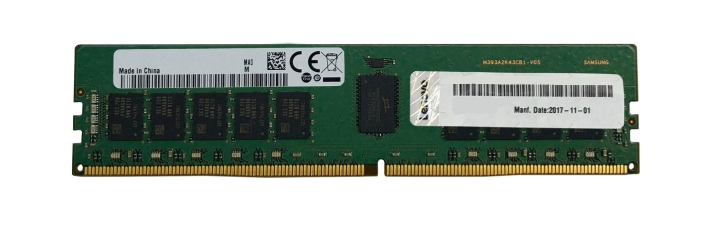
Lenovo 4ZC7A08707 Lenovo 4ZC7A08707 memory module 16 GB 1 x 16 GB DDR4 2933 MHz
ThinkSystem TruDDR4 Memory delivers trusted, tested, quality, performance, and reliability throughout the ThinkSystem portfolio. We use the highest quality industry-standard memory components sourced from Tier 1 DRAM suppliers. Only memory that meets these strict requirements are selected for TruDDR4 Memory. It is then compatibility tested and tuned on every ThinkSystem server to maximize reliability.High Performance MemoryLenovo offers high-performance and high-capacity memory options in ThinkSystem servers.Persistent MemoryLenovo ThinkSystem servers configured with Intel Optane DC Persistent Memory transforms the memory/storage hierarchy enabling faster insights from data. This breakthrough technology delivers large capacity, high speed, affordable memory with data persistence and advanced encryption capabilities. These DDR4 compatible modules significantly increase the capacity of available system memory, keeping more hot data closer to the CPU, and enabling greater operational efficiency by processing larger data sets with more user instances.3DS RDIMMsTo meet the ever increasing demand for higher density server memory modules, Lenovo offers 3DS (3 Dimensional Stacked) DDR4 RDIMMs which apply TSV (Through Silicon Via) technology from our partnership with a leading Tier 1 DRAM supplier. The new TSV 3DS stack technology enables higher density DRAM stack packages with higher operational frequency and reduced power consumption. The RDIMM configuration along with 3DS TSV DRAM packages exhibits performance benefits and lower power consumption over alternative high density solutions to ultimately provide the lowest TCO for data centers.Performance+ MemoryMemory intensive workloads needing a competitive advantage will benefit from Lenovo’s Performance+ memory. Lenovo engineers worked in partnership with leading memory suppliers to develop and tune ThinkSystem servers enabling them to exceed the latest industry standard for memory performance. Lenovo’s Performance+ memory delivers increased bandwidth and lower latency at 2933 MHz with memory all channels fully populated.
Part# 4ZC7A08707
SKU S19454
Limited Availability

HPE
HPE P02498-B21 Hewlett Packard Enterprise Intel Xeon Gold 5218 processor 2.3 GHz 22 MB L3
.
Part# P02498-B21
SKU S19454
Limited Availability

HPE
HPE 805351-B21B HPE 32GB (1x32GB) Dual Rank x4 DDR4-2400 CAS-17-17-17 Registered memory module 2400 MHz ECC
When you choose HPE DDR4 SmartMemory, you get great performance, reliability, and efficiency that provides the compatibility, capacity and bandwidth you need to productively manage your expanding workload with the HPE ProLiant Gen9 server, Apollo Family, Synergy and Blade Systems. The quality and reliability of DRAM are more important now than ever, as data center trends such as server virtualization, cloud computing, the use of large database applications, have all increased the need for higher capacity memory with greater uptime.HPE SmartMemory goes through rigorous qualification and testing processes that unlock extended memory performance features available only with Hewlett Packard Enterprise Gen9 servers. This extensive testing ensures that HPE server memory is completely compatible with and optimized for HPE servers.
Part# 805351-B21B
SKU S19454
Limited Availability
Origin Storage
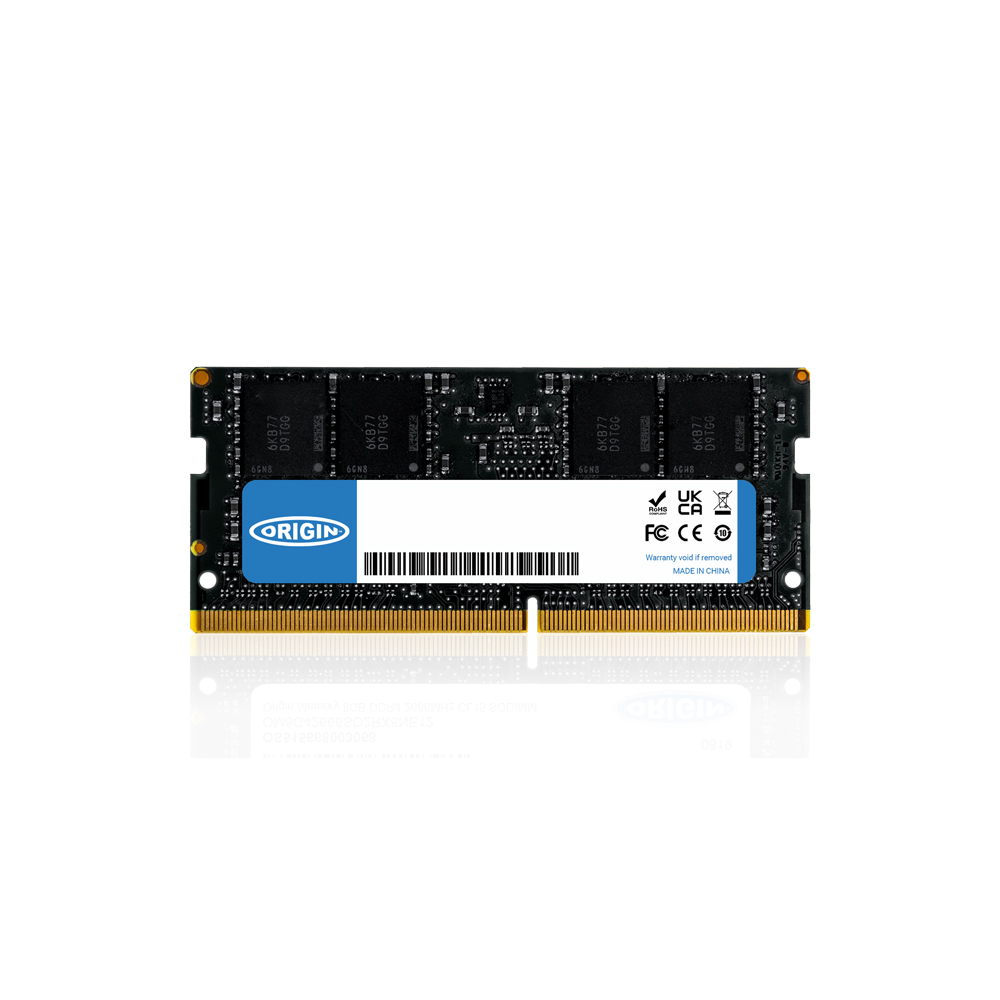
Origin Storage OM32G42400SO2RX8NE12 Origin Storage 32GB DDR4 2400MHz SODIMM 2Rx8 Non-ECC 1.2v
Origin Storage Matched Memory solutions are 100% guaranteed compatible for the target system, come with a lifetime warranty and are only manufactured using components from the top global manufacturers. Origin Matched Memory enables a cost effective upgrade process no matter the situation, whether your clients are re-purposing existing infrastructure or purchasing new systems looking to utilise the benefits offered by using compatible solutions vs the OEM Original. Origin Matched Memory is available in a wide breadth of generations covering DDR2, 3 & 4, and also in a variety of form factors covering SODIMM, FBDIMM, UDIMM, RDIMM and LRDIMM meaning that we can supply memory for nearly any laptop, desktop or server configuration.
Part# OM32G42400SO2RX8NE12
SKU S19454
Limited Availability
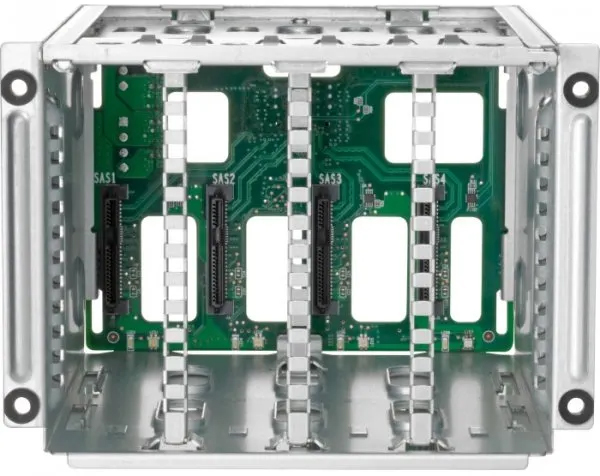
Lenovo
Lenovo 4XH7A09832 Lenovo 4XH7A09832 computer case part Rack HDD mounting bracket
Part# 4XH7A09832
SKU S19454
Limited Availability
Lenovo
Lenovo 4XF0U53614 Lenovo 4XF0U53614 mounting kit
The ThinkCentre M.2 SSD Kit II is a dedicated bracket to install an SSD into select ThinkCentre PCs. Easily upgrade your ThinkCentre storage with this bracket kit.
Part# 4XF0U53614
SKU S19454
Limited Availability
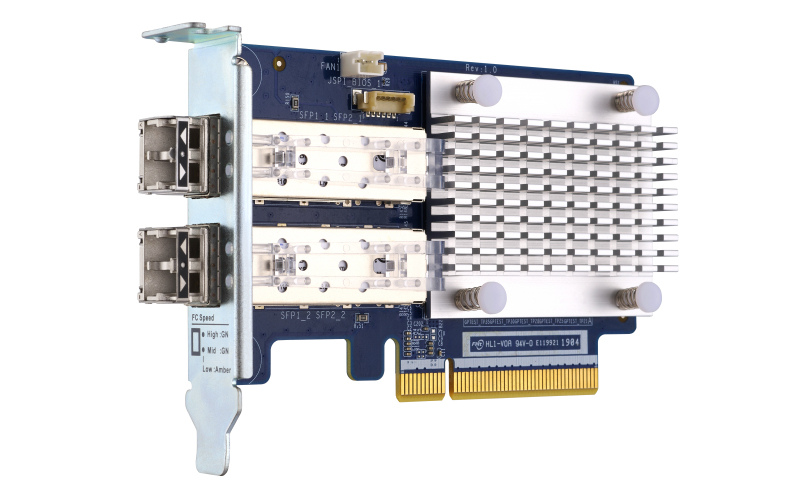
QNAP
QNAP QXP-16G2FC QNAP QXP-16G2FC network card Internal Fiber 14025 Mbit/s
Common Fibre Channel SAN (Storage Area Networks) are closed network environments, and their devices are often expensive while lacking deployment flexibility. QNAP introduces dual-port 16Gb/32Gb Fibre Channel expansion cards that feature high performance, reliability, security, and energy efficient Fibre Channel. With a QNAP Fibre Channel card in your QNAP NAS, your NAS can be added to an existing SAN environment at an affordable price point to fulfill requirements for high-performance storage and backup.QNAP NAS as a Fibre Channel SAN storage solutionReplacing Fibre Channel SAN environments can be expensive and time consuming. By installing a PCIe-based Fibre Channel card to a QNAP NAS, your existing SAN environment gains a budget-friendly storage or backup solution. Not only is a QNAP NAS more affordable than typical SAN devices, but it also provides rich enterprise features to make storage applications more efficient - including LUN snapshots, Qtier auto-tiering, SSD cache acceleration, hybrid cloud backup solutions, and much more. The Fibre-Channel-ready QNAP NAS is a unified storage solution that provides SAN, NAS, and cloud storage features with higher cost-effectiveness and application flexibility.Manage Fibre Channel connection using iSCSI & Fibre Channel appUse the QTS iSCSI & Fibre Channel app to set the QNAP NAS as a Fibre Channel Target, and add the NAS to your SAN environment with WWPN addresses. You can also take advantage of the Fibre Channel Switch that allows multiple connection paths to have multiple servers share the NAS. In addition, the LUN Masking and Port Binding features provide an additional layer of security for your data.
Part# QXP-16G2FC
SKU S19454
Limited Availability
Intel
Intel CD8069504381800 Intel Core i9-10980XE processor 3 GHz 24.75 MB Smart Cache
Intel® Virtualization Technology for Directed I/O (VT-d)Intel® Virtualization Technology for Directed I/O (VT-d) continues from the existing support for IA-32 (VT-x) and Itanium® processor (VT-i) virtualization adding new support for I/O-device virtualization. Intel VT-d can help end users improve security and reliability of the systems and also improve performance of I/O devices in virtualized environments.Intel® Virtualization Technology (VT-x)Intel® Virtualization Technology (VT-x) allows one hardware platform to function as multiple âvirtualâ platforms. It offers improved manageability by limiting downtime and maintaining productivity by isolating computing activities into separate partitions.Intel® 64Intel® 64 architecture delivers 64-bit computing on server, workstation, desktop and mobile platforms when combined with supporting software.¹ Intel 64 architecture improves performance by allowing systems to address more than 4 GB of both virtual and physical memory.CacheCPU Cache is an area of fast memory located on the processor. Intel® Smart Cache refers to the architecture that allows all cores to dynamically share access to the last level cache.Intel® AES New InstructionsIntel® AES New Instructions (Intel® AES-NI) are a set of instructions that enable fast and secure data encryption and decryption. AES-NI are valuable for a wide range of cryptographic applications, for example: applications that perform bulk encryption/decryption, authentication, random number generation, and authenticated encryption.Intel® Turbo Boost TechnologyIntel® Turbo Boost Technology dynamically increases the processor's frequency as needed by taking advantage of thermal and power headroom to give you a burst of speed when you need it, and increased energy efficiency when you donât.Max Turbo FrequencyMax Turbo Frequency is the maximum single-core frequency at which the processor is capable of operating using Intel® Turbo Boost Technology and, if present, Intel® Turbo Boost Max Technology 3.0 and Intel® Thermal Velocity Boost. Frequency is typically measured in gigahertz (GHz), or billion cycles per second.Execute Disable BitExecute Disable Bit is a hardware-based security feature that can reduce exposure to viruses and malicious-code attacks and prevent harmful software from executing and propagating on the server or network.Intel® Hyper-Threading TechnologyIntel® Hyper-Threading Technology (Intel® HT Technology) delivers two processing threads per physical core. Highly threaded applications can get more work done in parallel, completing tasks sooner.Intel® Optane⢠Memory SupportedIntel® Optane⢠memory is a revolutionary new class of non-volatile memory that sits in between system memory and storage to accelerate system performance and responsiveness. When combined with the Intel® Rapid Storage Technology Driver, it seamlessly manages multiple tiers of storage while presenting one virtual drive to the OS, ensuring that data frequently used resides on the fastest tier of storage. Intel® Optane⢠memory requires specific hardware and software configuration.Enhanced Intel SpeedStep® TechnologyEnhanced Intel SpeedStep® Technology is an advanced means of enabling high performance while meeting the power-conservation needs of mobile systems. Conventional Intel SpeedStep® Technology switches both voltage and frequency in tandem between high and low levels in response to processor load. Enhanced Intel SpeedStep® Technology builds upon that architecture using design strategies such as Separation between Voltage and Frequency Changes, and Clock Partitioning and Recovery.Intel® Deep Learning Boost (Intel® DL Boost) on CPUA new set of embedded processor technologies designed to accelerate AI deep learning use cases. It extends Intel AVX-512 with a new Vector Neural Network Instruction (VNNI) that significantly increases deep learning inference performance over previous generations.Instruction Set ExtensionsInstruction Set Extensions are additional instructions which can increase performance when the same operations are performed on multiple data objects. These can include SSE (Streaming SIMD Extensions) and AVX (Advanced Vector Extensions).Intel® Turbo Boost Max Technology 3.0 FrequencyIntel® Turbo Boost Max Technology 3.0 identifies the best performing core(s) on a processor and provides increased performance on those cores through increasing frequency as needed by taking advantage of power and thermal headroom. Intel® Turbo Boost Max Technology 3.0 frequency is the clock frequency of the CPU when running in this mode.Intel® Turbo Boost Max Technology 3.0Intel® Turbo Boost Max Technology 3.0 identifies the best performing core(s) on a processor and provides increased performance on those cores through increasing frequency as needed by taking advantage of power and thermal headroom.# of AVX-512 FMA UnitsIntel® Advanced Vector Extensions 512 (AVX-512), new instruction set extensions, delivering ultra-wide (512-bit) vector operations capabilities, with up to 2 FMAs (Fused Multiply Add instructions), to accelerate performance for your most demanding computational tasks.
Part# CD8069504381800
SKU S19454
Limited Availability

Item(s) added to cart


