
 0
0
Computer Components
4620 –
4630
of
4773
Availability
Sort by
Advance Filters
Intel
Intel CD8069504393600 Intel Xeon W-2255 processor 3.7 GHz 19.25 MB
Intel® Trusted Execution TechnologyIntel® Trusted Execution Technology for safer computing is a versatile set of hardware extensions to Intel® processors and chipsets that enhance the digital office platform with security capabilities such as measured launch and protected execution. It enables an environment where applications can run within their own space, protected from all other software on the system.Intel® Virtualization Technology for Directed I/O (VT-d)Intel® Virtualization Technology for Directed I/O (VT-d) continues from the existing support for IA-32 (VT-x) and Itanium® processor (VT-i) virtualization adding new support for I/O-device virtualization. Intel VT-d can help end users improve security and reliability of the systems and also improve performance of I/O devices in virtualized environments.Intel® Virtualization Technology (VT-x)Intel® Virtualization Technology (VT-x) allows one hardware platform to function as multiple âvirtualâ platforms. It offers improved manageability by limiting downtime and maintaining productivity by isolating computing activities into separate partitions.Intel® 64Intel® 64 architecture delivers 64-bit computing on server, workstation, desktop and mobile platforms when combined with supporting software.¹ Intel 64 architecture improves performance by allowing systems to address more than 4 GB of both virtual and physical memory.CacheCPU Cache is an area of fast memory located on the processor. Intel® Smart Cache refers to the architecture that allows all cores to dynamically share access to the last level cache.Intel® AES New InstructionsIntel® AES New Instructions (Intel® AES-NI) are a set of instructions that enable fast and secure data encryption and decryption. AES-NI are valuable for a wide range of cryptographic applications, for example: applications that perform bulk encryption/decryption, authentication, random number generation, and authenticated encryption.Idle StatesIdle States (C-states) are used to save power when the processor is idle. C0 is the operational state, meaning that the CPU is doing useful work. C1 is the first idle state, C2 the second, and so on, where more power saving actions are taken for numerically higher C-states.Intel® Turbo Boost TechnologyIntel® Turbo Boost Technology dynamically increases the processor's frequency as needed by taking advantage of thermal and power headroom to give you a burst of speed when you need it, and increased energy efficiency when you donât.Max Turbo FrequencyMax Turbo Frequency is the maximum single-core frequency at which the processor is capable of operating using Intel® Turbo Boost Technology and, if present, Intel® Turbo Boost Max Technology 3.0 and Intel® Thermal Velocity Boost. Frequency is typically measured in gigahertz (GHz), or billion cycles per second.Execute Disable BitExecute Disable Bit is a hardware-based security feature that can reduce exposure to viruses and malicious-code attacks and prevent harmful software from executing and propagating on the server or network.Intel® Hyper-Threading TechnologyIntel® Hyper-Threading Technology (Intel® HT Technology) delivers two processing threads per physical core. Highly threaded applications can get more work done in parallel, completing tasks sooner.Instruction SetAn instruction set refers to the basic set of commands and instructions that a microprocessor understands and can carry out. The value shown represents which Intelâs instruction set this processor is compatible with.Intel vPro® Platform EligibilityThe Intel vPro® platform is a set of hardware and technologies used to build business computing endpoints with premium performance, built-in security, modern manageability and platform stability.Intel® VT-x with Extended Page Tables (EPT)Intel® VT-x with Extended Page Tables (EPT), also known as Second Level Address Translation (SLAT), provides acceleration for memory intensive virtualized applications. Extended Page Tables in Intel® Virtualization Technology platforms reduces the memory and power overhead costs and increases battery life through hardware optimization of page table management.Intel® Optane⢠Memory SupportedIntel® Optane⢠memory is a revolutionary new class of non-volatile memory that sits in between system memory and storage to accelerate system performance and responsiveness. When combined with the Intel® Rapid Storage Technology Driver, it seamlessly manages multiple tiers of storage while presenting one virtual drive to the OS, ensuring that data frequently used resides on the fastest tier of storage. Intel® Optane⢠memory requires specific hardware and software configuration.Enhanced Intel SpeedStep® TechnologyEnhanced Intel SpeedStep® Technology is an advanced means of enabling high performance while meeting the power-conservation needs of mobile systems. Conventional Intel SpeedStep® Technology switches both voltage and frequency in tandem between high and low levels in response to processor load. Enhanced Intel SpeedStep® Technology builds upon that architecture using design strategies such as Separation between Voltage and Frequency Changes, and Clock Partitioning and Recovery.Intel® Demand Based SwitchingIntel® Demand Based Switching is a power-management technology in which the applied voltage and clock speed of a microprocessor are kept at the minimum necessary levels until more processing power is required. This technology was introduced as Intel SpeedStep® Technology in the server marketplace.Secure KeyIntel® Secure Key consists of a digital random number generator that creates truly random numbers to strengthen encryption algorithms.Intel® Speed Shift TechnologyIntel® Speed Shift Technology uses hardware-controlled P-states to deliver dramatically quicker responsiveness with single-threaded, transient (short duration) workloads, such as web browsing, by allowing the processor to more quickly select its best operating frequency and voltage for optimal performance and power efficiency.Intel® Software Guard Extensions (Intel® SGX)Intel® Software Guard Extensions (Intel® SGX) provide applications the ability to create hardware enforced trusted execution protection for their applicationsâ sensitive routines and data. Intel® SGX provides developers a way to partition their code and data into CPU hardened trusted execution environments (TEEâs).Intel® Deep Learning Boost (Intel® DL Boost) on CPUA new set of embedded processor technologies designed to accelerate AI deep learning use cases. It extends Intel AVX-512 with a new Vector Neural Network Instruction (VNNI) that significantly increases deep learning inference performance over previous generations.Instruction Set ExtensionsInstruction Set Extensions are additional instructions which can increase performance when the same operations are performed on multiple data objects. These can include SSE (Streaming SIMD Extensions) and AVX (Advanced Vector Extensions).Intel® Turbo Boost Max Technology 3.0 FrequencyIntel® Turbo Boost Max Technology 3.0 identifies the best performing core(s) on a processor and provides increased performance on those cores through increasing frequency as needed by taking advantage of power and thermal headroom. Intel® Turbo Boost Max Technology 3.0 frequency is the clock frequency of the CPU when running in this mode.Intel® Turbo Boost Max Technology 3.0Intel® Turbo Boost Max Technology 3.0 identifies the best performing core(s) on a processor and provides increased performance on those cores through increasing frequency as needed by taking advantage of power and thermal headroom.Max # of UPI LinksIntel® Ultra Path Interconnect (UPI) links are a high speed, point-to-point interconnect bus between the processors, delivering increased bandwidth and performance over Intel® QPI.# of AVX-512 FMA UnitsIntel® Advanced Vector Extensions 512 (AVX-512), new instruction set extensions, delivering ultra-wide (512-bit) vector operations capabilities, with up to 2 FMAs (Fused Multiply Add instructions), to accelerate performance for your most demanding computational tasks.Thermal Monitoring TechnologiesThermal Monitoring Technologies protect the processor package and the system from thermal failure through several thermal management features. An on-die Digital Thermal Sensor (DTS) detects the core's temperature, and the thermal management features reduce package power consumption and thereby temperature when required in order to remain within normal operating limits.Intel® Identity Protection TechnologyIntel® Identity Protection Technology is a built-in security token technology that helps provide a simple, tamper-resistant method for protecting access to your online customer and business data from threats and fraud. Intel® IPT provides a hardware-based proof of a unique userâs PC to websites, financial institutions, and network services; providing verification that it is not malware attempting to login. Intel® IPT can be a key component in two-factor authentication solutions to protect your information at websites and business log-ins.Intel® Volume Management Device (VMD)Intel® Volume Management Device (VMD) provides a common, robust method of hot plug and LED management for NVMe-based solid state drives.Intel® Memory Protection Extensions (Intel® MPX)Intel® Memory Protection Extensions (Intel® MPX) provides a set of hardware features that can be used by software in conjunction with compiler changes to check that memory references intended at compile time do not become unsafe at runtime due to buffer overflow or underflow.Intel® Boot GuardIntel® Device Protection Technology with Boot Guard helps protect the systemâs pre-OS environment from viruses and malicious software attacks.Intel® Transactional Synchronization ExtensionsIntel® Transactional Synchronization Extensions (Intel® TSX) are a set of instructions that add hardware transactional memory support to improve performance of multi-threaded software.
Part# CD8069504393600
SKU S19454
Limited Availability


Limited Availability
Kingston Technology
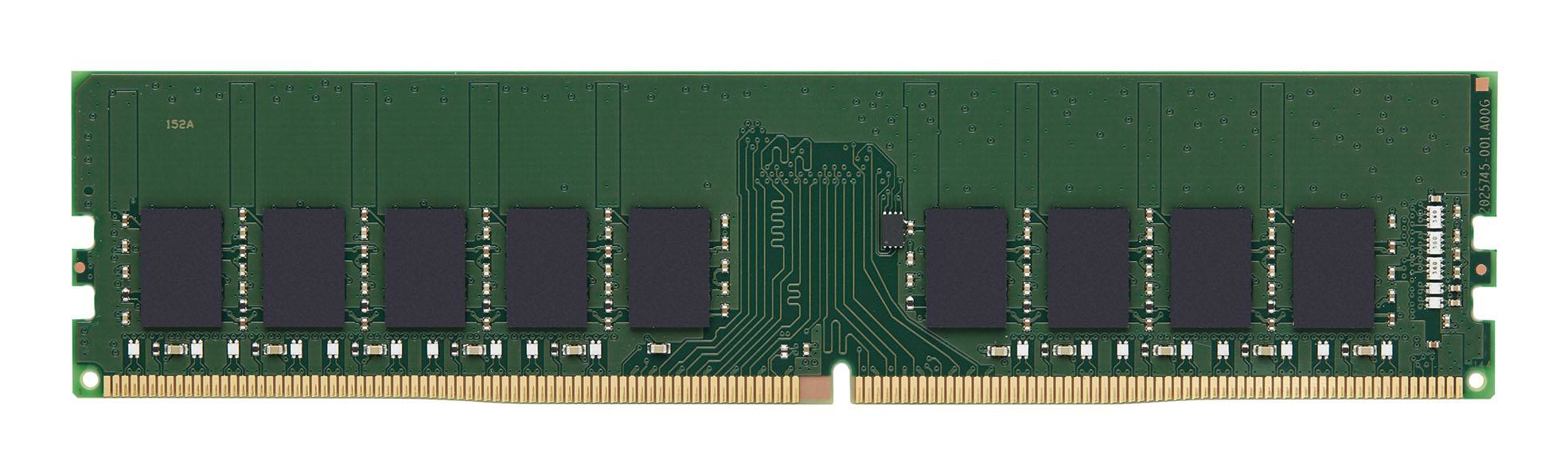
Kingston Technology KTL-TS426E/16G Kingston Technology KTL-TS426E/16G memory module 16 GB 1 x 16 GB DDR4 2666 MHz ECC
Kingston memory is designed, manufactured and rigorously tested to meet the exact specifications of each brand name system.
Part# KTL-TS426E/16G
SKU S19454
Limited Availability

HPE
HPE 805349-B21B HPE 805349-B21 memory module 16 GB 1 x 16 GB DDR4 2400 MHz ECC
Has your server been configured with the memory it needs to perform as its role expands over time?HPE Server Memory is designed for SMB and enterprise customers with a significant need for performance and capacity, along with a desire to manage total cost of ownership. HPE SmartMemory enables total server memory optimization, runs at top throughput speed, and is among the most power-efficient memory available. In addition to performance and efficiency, HPE SmartMemory also delivers on reliability. Only the highest-quality DRAM modules are selected from top suppliers. Now more than ever, DRAM quality is critical, as data center trends such as server virtualization, cloud computing, and the use of large database applications have increased the need for higher-capacity memory with greater up-time. HPE SmartMemory undergoes rigorous qualification and testing processes that unlock memory performance features available only with HPE servers.What's new- HPE SmartMemory 3200 MT/s memory supported on HPE Gen10 Plus AMD serversFeaturesHigh Performance- HPE DDR4 3200 MT/s SmartMemory provides improvements in bandwidth in comparison to DDR4 2933 MT/s memory modules.- HPE DDR4 SmartMemory delivers improvements in latency at 3200 MT/s in comparison to DDR4 2933 MT/s memory modules.High Reliability- Hewlett Packard Enterprise tests and qualifies HPE DDR4 SmartMemory modules on all HPE server platforms to deliver the highest level of signal integrity.- HPE DDR4 SmartMemory prevents unnecessary DIMM replacement and reduces server downtime with advanced memory error detection technology.- HPE uses the highest quality materials for its DDR4 server memory, reducing issues that may affect signal integrity and increasing system reliability.- HPE provides server memory that performs above industry standards, enabling customers to increase the performance of their servers without having to increase the amount of memory purchased.
Part# 805349-B21B
SKU S19454
Limited Availability
HPE
HPE 726719-B21B HPE 726719-B21 (Bulk) memory module 16 GB 1 x 16 GB DDR4 2133 MHz ECC
Has your server been configured with the memory it needs to perform as its role expands over time? HPE Server Memory is designed for SMB and enterprise customers with a significant need for performance and capacity, along with a desire to manage total cost of ownership. HPE SmartMemory enables total server memory optimization, runs at top throughput speed, and is among the most power-efficient memory available. In addition to performance and efficiency, HPE SmartMemory also delivers on reliability. Only the highest-quality DRAM modules are selected from top suppliers. Now more than ever, DRAM quality is critical, as data center trends such as server virtualization, cloud computing, and the use of large database applications have increased the need for higher-capacity memory with greater up-time. HPE SmartMemory undergoes rigorous qualification and testing processes that unlock memory performance features available only with HPE servers.What's new- HPE SmartMemory 2933 MT/s memory supported on HPE Gen10 AMD serversFeaturesHigh Performance- HPE DDR4 2933 MT/s SmartMemory provides improvements in bandwidth in comparison to DDR4 2666 MT/s memory modules.- HPE DDR4 SmartMemory delivers improvements in latency at 2933 MT/s in comparison to DDR4 2666 MT/s memory modules.High Reliability- Hewlett Packard Enterprise tests and qualifies HPE DDR4 SmartMemory modules on all HPE server platforms to deliver the highest level of signal integrity.- HPE DDR4 SmartMemory prevents unnecessary DIMM replacement and reduces server downtime with advanced memory error detection technology.- HPE uses the highest quality materials for its DDR4 server memory, reducing issues that may affect signal integrity and increasing system reliability.- HPE provides server memory that performs above industry standards, enabling customers to increase the performance of their servers without having to increase the amount of memory purchased.
Part# 726719-B21B
SKU S19454
Limited Availability
QNAP
QNAP QXG-5G1T-111C QNAP QXG-5G1T-111C network card Internal Ethernet 5000 Mbit/s
QNAP offers various cost-effective network expansion cards for businesses and organizations to upgrade the bandwidth of their QNAP NAS to accommodate intensive data transfer and virtualization applications.5 GbE network expansion cardThe 5 GbE network expansion card delivers speeds of up to 5 Gbps. You can easily upgrade the transfer speed in your network environment with existing cables.
Part# QXG-5G1T-111C
SKU S19454
Limited Availability
Intel
Intel CD8069504381900 Intel Core i9-10940X processor 3.3 GHz 19.25 MB Smart Cache
Intel® Virtualization Technology for Directed I/O (VT-d)Intel® Virtualization Technology for Directed I/O (VT-d) continues from the existing support for IA-32 (VT-x) and Itanium® processor (VT-i) virtualization adding new support for I/O-device virtualization. Intel VT-d can help end users improve security and reliability of the systems and also improve performance of I/O devices in virtualized environments.Intel® Virtualization Technology (VT-x)Intel® Virtualization Technology (VT-x) allows one hardware platform to function as multiple âvirtualâ platforms. It offers improved manageability by limiting downtime and maintaining productivity by isolating computing activities into separate partitions.Intel® 64Intel® 64 architecture delivers 64-bit computing on server, workstation, desktop and mobile platforms when combined with supporting software.¹ Intel 64 architecture improves performance by allowing systems to address more than 4 GB of both virtual and physical memory.CacheCPU Cache is an area of fast memory located on the processor. Intel® Smart Cache refers to the architecture that allows all cores to dynamically share access to the last level cache.Intel® AES New InstructionsIntel® AES New Instructions (Intel® AES-NI) are a set of instructions that enable fast and secure data encryption and decryption. AES-NI are valuable for a wide range of cryptographic applications, for example: applications that perform bulk encryption/decryption, authentication, random number generation, and authenticated encryption.Intel® Turbo Boost TechnologyIntel® Turbo Boost Technology dynamically increases the processor's frequency as needed by taking advantage of thermal and power headroom to give you a burst of speed when you need it, and increased energy efficiency when you donât.Max Turbo FrequencyMax Turbo Frequency is the maximum single-core frequency at which the processor is capable of operating using Intel® Turbo Boost Technology and, if present, Intel® Turbo Boost Max Technology 3.0 and Intel® Thermal Velocity Boost. Frequency is typically measured in gigahertz (GHz), or billion cycles per second.Execute Disable BitExecute Disable Bit is a hardware-based security feature that can reduce exposure to viruses and malicious-code attacks and prevent harmful software from executing and propagating on the server or network.Intel® Hyper-Threading TechnologyIntel® Hyper-Threading Technology (Intel® HT Technology) delivers two processing threads per physical core. Highly threaded applications can get more work done in parallel, completing tasks sooner.Intel® Optane⢠Memory SupportedIntel® Optane⢠memory is a revolutionary new class of non-volatile memory that sits in between system memory and storage to accelerate system performance and responsiveness. When combined with the Intel® Rapid Storage Technology Driver, it seamlessly manages multiple tiers of storage while presenting one virtual drive to the OS, ensuring that data frequently used resides on the fastest tier of storage. Intel® Optane⢠memory requires specific hardware and software configuration.Enhanced Intel SpeedStep® TechnologyEnhanced Intel SpeedStep® Technology is an advanced means of enabling high performance while meeting the power-conservation needs of mobile systems. Conventional Intel SpeedStep® Technology switches both voltage and frequency in tandem between high and low levels in response to processor load. Enhanced Intel SpeedStep® Technology builds upon that architecture using design strategies such as Separation between Voltage and Frequency Changes, and Clock Partitioning and Recovery.Intel® Deep Learning Boost (Intel® DL Boost) on CPUA new set of embedded processor technologies designed to accelerate AI deep learning use cases. It extends Intel AVX-512 with a new Vector Neural Network Instruction (VNNI) that significantly increases deep learning inference performance over previous generations.Instruction Set ExtensionsInstruction Set Extensions are additional instructions which can increase performance when the same operations are performed on multiple data objects. These can include SSE (Streaming SIMD Extensions) and AVX (Advanced Vector Extensions).Intel® Turbo Boost Max Technology 3.0 FrequencyIntel® Turbo Boost Max Technology 3.0 identifies the best performing core(s) on a processor and provides increased performance on those cores through increasing frequency as needed by taking advantage of power and thermal headroom. Intel® Turbo Boost Max Technology 3.0 frequency is the clock frequency of the CPU when running in this mode.Intel® Turbo Boost Max Technology 3.0Intel® Turbo Boost Max Technology 3.0 identifies the best performing core(s) on a processor and provides increased performance on those cores through increasing frequency as needed by taking advantage of power and thermal headroom.# of AVX-512 FMA UnitsIntel® Advanced Vector Extensions 512 (AVX-512), new instruction set extensions, delivering ultra-wide (512-bit) vector operations capabilities, with up to 2 FMAs (Fused Multiply Add instructions), to accelerate performance for your most demanding computational tasks.
Part# CD8069504381900
SKU S19454
Limited Availability
Intel
Intel CD8069504382000 Intel Core i9-10920X processor 3.5 GHz 19.25 MB Smart Cache
Intel® Virtualization Technology for Directed I/O (VT-d)Intel® Virtualization Technology for Directed I/O (VT-d) continues from the existing support for IA-32 (VT-x) and Itanium® processor (VT-i) virtualization adding new support for I/O-device virtualization. Intel VT-d can help end users improve security and reliability of the systems and also improve performance of I/O devices in virtualized environments.Intel® Virtualization Technology (VT-x)Intel® Virtualization Technology (VT-x) allows one hardware platform to function as multiple âvirtualâ platforms. It offers improved manageability by limiting downtime and maintaining productivity by isolating computing activities into separate partitions.Intel® 64Intel® 64 architecture delivers 64-bit computing on server, workstation, desktop and mobile platforms when combined with supporting software.¹ Intel 64 architecture improves performance by allowing systems to address more than 4 GB of both virtual and physical memory.CacheCPU Cache is an area of fast memory located on the processor. Intel® Smart Cache refers to the architecture that allows all cores to dynamically share access to the last level cache.Intel® AES New InstructionsIntel® AES New Instructions (Intel® AES-NI) are a set of instructions that enable fast and secure data encryption and decryption. AES-NI are valuable for a wide range of cryptographic applications, for example: applications that perform bulk encryption/decryption, authentication, random number generation, and authenticated encryption.Intel® Turbo Boost TechnologyIntel® Turbo Boost Technology dynamically increases the processor's frequency as needed by taking advantage of thermal and power headroom to give you a burst of speed when you need it, and increased energy efficiency when you donât.Max Turbo FrequencyMax Turbo Frequency is the maximum single-core frequency at which the processor is capable of operating using Intel® Turbo Boost Technology and, if present, Intel® Turbo Boost Max Technology 3.0 and Intel® Thermal Velocity Boost. Frequency is typically measured in gigahertz (GHz), or billion cycles per second.Execute Disable BitExecute Disable Bit is a hardware-based security feature that can reduce exposure to viruses and malicious-code attacks and prevent harmful software from executing and propagating on the server or network.Intel® Hyper-Threading TechnologyIntel® Hyper-Threading Technology (Intel® HT Technology) delivers two processing threads per physical core. Highly threaded applications can get more work done in parallel, completing tasks sooner.Intel® Optane⢠Memory SupportedIntel® Optane⢠memory is a revolutionary new class of non-volatile memory that sits in between system memory and storage to accelerate system performance and responsiveness. When combined with the Intel® Rapid Storage Technology Driver, it seamlessly manages multiple tiers of storage while presenting one virtual drive to the OS, ensuring that data frequently used resides on the fastest tier of storage. Intel® Optane⢠memory requires specific hardware and software configuration.Enhanced Intel SpeedStep® TechnologyEnhanced Intel SpeedStep® Technology is an advanced means of enabling high performance while meeting the power-conservation needs of mobile systems. Conventional Intel SpeedStep® Technology switches both voltage and frequency in tandem between high and low levels in response to processor load. Enhanced Intel SpeedStep® Technology builds upon that architecture using design strategies such as Separation between Voltage and Frequency Changes, and Clock Partitioning and Recovery.Intel® Deep Learning Boost (Intel® DL Boost) on CPUA new set of embedded processor technologies designed to accelerate AI deep learning use cases. It extends Intel AVX-512 with a new Vector Neural Network Instruction (VNNI) that significantly increases deep learning inference performance over previous generations.Instruction Set ExtensionsInstruction Set Extensions are additional instructions which can increase performance when the same operations are performed on multiple data objects. These can include SSE (Streaming SIMD Extensions) and AVX (Advanced Vector Extensions).Intel® Turbo Boost Max Technology 3.0 FrequencyIntel® Turbo Boost Max Technology 3.0 identifies the best performing core(s) on a processor and provides increased performance on those cores through increasing frequency as needed by taking advantage of power and thermal headroom. Intel® Turbo Boost Max Technology 3.0 frequency is the clock frequency of the CPU when running in this mode.Intel® Turbo Boost Max Technology 3.0Intel® Turbo Boost Max Technology 3.0 identifies the best performing core(s) on a processor and provides increased performance on those cores through increasing frequency as needed by taking advantage of power and thermal headroom.# of AVX-512 FMA UnitsIntel® Advanced Vector Extensions 512 (AVX-512), new instruction set extensions, delivering ultra-wide (512-bit) vector operations capabilities, with up to 2 FMAs (Fused Multiply Add instructions), to accelerate performance for your most demanding computational tasks.
Part# CD8069504382000
SKU S19454
Limited Availability
Lenovo
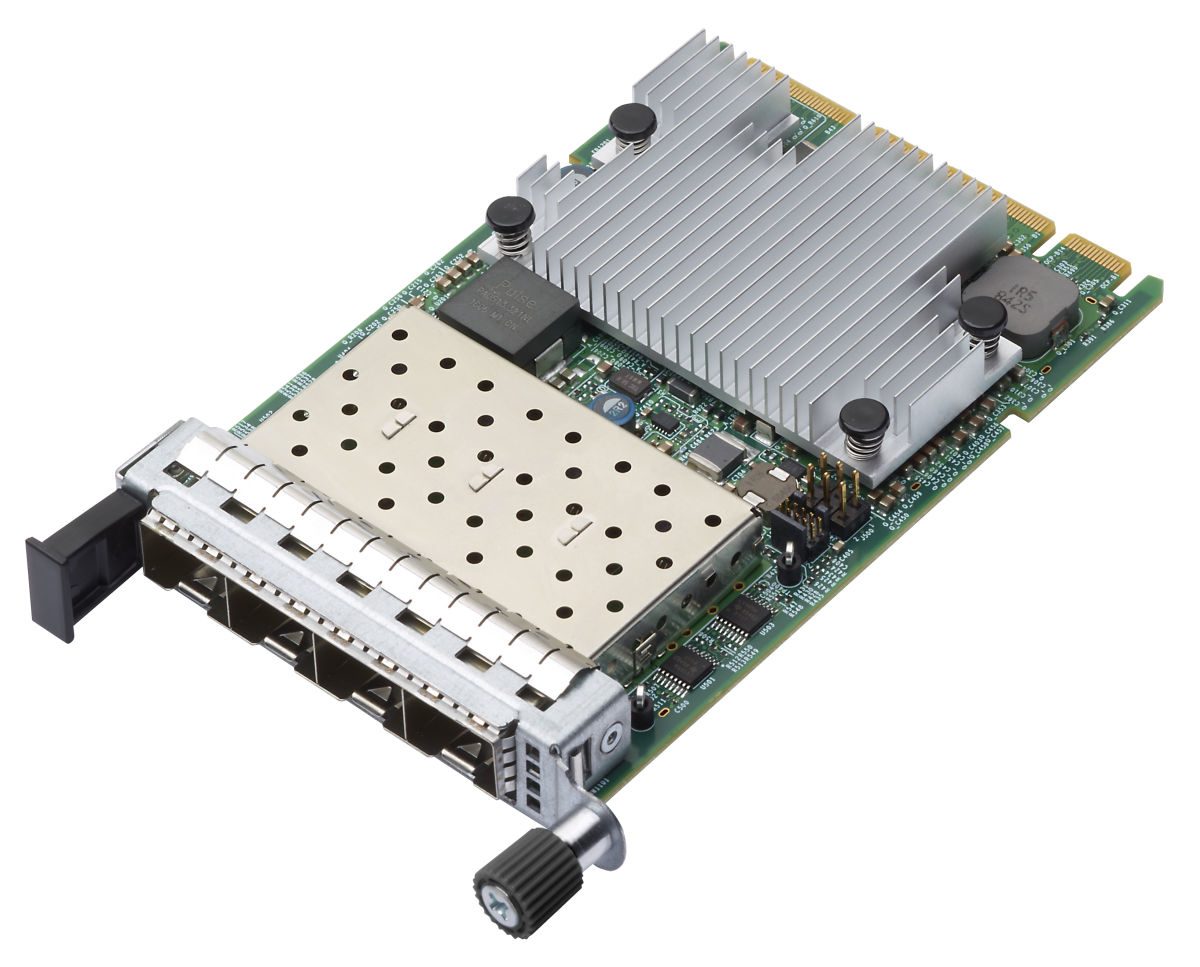
Lenovo 4XC7A08242 Lenovo 4XC7A08242 network card Internal Fiber 25000 Mbit/s
Abstract The ThinkSystem Broadcom 57454 10/25GbE SFP28 Ethernet Adapters are high-performance 25 Gb Ethernet adapters in either standard PCIe form factor or the Open Compute Project (OCP) 3.0 SFF form factor. This product guide provides essential presales information to understand the adapters and their key features, specifications, and compatibility. This guide is intended for technical specialists, sales specialists, sales engineers, IT architects, and other IT professionals who want to learn more about Broadcom 25 GbE network adapters and consider their use in IT solutions. Change History Changes in the February 18 update: - New ThinkSystem Broadcom 57454 10/25GbE SFP28 4-port PCIe Ethernet Adapter Introduction The ThinkSystem Broadcom 57454 10/25GbE SFP28 Ethernet Adapters are high-performance 25 Gb Ethernet adapters in either standard PCIe form factor or the Open Compute Project (OCP) 3.0 SFF form factor. They offer TruFlow™ intelligent flow processing and supports advanced networking technologies including RoCE v1/2, SDN, NFV and virtualization.
Part# 4XC7A08242
SKU S19454
Limited Availability

HPE
HPE P10103-B21 HPE Ethernet 10Gb 2-port BASE-T QL41132HQRJ OCP3 Internal 10000 Mbit/s
Is your data center constantly challenged to deliver increased security and reliability in a cost-effective and scalable solution for your network bandwidth?The HPE Gen10 Plus Ethernet Adapters are 1Gb, 10Gb and 10/25Gb Ethernet solutions that are scalable and compatible with HPE Gen10 Plus servers for hybrid cloud services, mobile data and streaming video applications.Your server is the foundation of your data center, but it doesnât work alone. When one link in your component chain slows down, so does the rest of your operation. Keep your network and data flowing with a seamless ecosystem of HPE servers, networking adapters, transceivers, cables, and switches.FeaturesBetter Performance- HPE Gen10 Plus Ethernet Adapters are engineered for an assortment of bandwidths and latency sensitive applications.- Reduces CPU utilization with support for a variety of I/O offloads including RDMA and Tunneling.Reliability and Security- HPE Gen10 Plus Ethernet Adapters authenticate updates for NICs that signed firmware is correct and trusted to reduce rogue firmware installation.- Protect applications, data, and server infrastructure by authenticating digitally-signed firmware via a root of trust architecture.
Part# P10103-B21
SKU S19454
Limited Availability

Item(s) added to cart


